The value potential of Kyrgyz national physical culture and sports: medical and psychosocial analysis
REVIEW
The value potential of Kyrgyz national physical culture and sports: medical and psychosocial analysis
Article Summary
- DOI: 10.24969/hvt.2026.631
- CARDIOVASCULAR DISEASES
- Published: 08/03/2026
- Received: 30/01/2026
- Revised: 03/03/2026
- Accepted: 03/03/2026
- Views: 2205
- Downloads: 913
- Keywords: national physical culture, national sports, traditional sports, values of physical culture, population health, medical and social aspect, impact on health
Address for Correspondence: Feruza A. Kochkorova, Kyrgyz State Medical Academy named after I.K. Akhunbaev, Bishkek, Kyrgyz Republic.
Email: feruza.k71@mail.ru
ORCID: Merazhidin M. Borkoshev- 0009-0009-9398-6537; Feruza A. Kochkorova - 0000-0002-1632-0063;
Baatyrbek K. Anarkulov - 0009-0009-5673-4824; Aizat A. Anarkulova - 0000-0003-0124-2549;
Rakhmatullo P. Anarkulov - 0000-0001-5530-1650; Khabibulla F. Anarkulov - 0009-0006-8078-8628;
Gulnura A. Kochkorova - 0009-0009-8091-2889.
Merazhidin M. Borkoshev1, Feruza A. Kochkorova2, Baatyrbek K. Anarkulov3, Aizat A. Anarkulova4, Rakhmatullo P. Anarkulov5, Khabibulla F. Anarkulov6, Gulnura A. Kochkorova1
1Kyzyl-Kiya Humanitarian-Pedagogical Institute named after M.M. Tayirova, Kyzyl-Kiya, Kyrgyz Republic
2Kyrgyz State Medical Academy named after I.K. Akhunbaev, Bishkek, Kyrgyz Republic
3Scientific and educational complex named after. M. Lomonosov, Bishkek, Kyrgyz Republic
4Kyrgyz National University named after J. Balasagyn, Bishkek, Kyrgyz Republic.
5Osh State University, Osh, Kyrgyz Republic
6Kyrgyz State University named after I. Arabaev, Bishkek, Kyrgyz Republic
Abstract
Objective: Kyrgyz national physical culture and traditional sports, developed in the context of a high-altitude nomadic lifestyle, represent a significant medical and social resource with significant health and adaptive potential. The current decline in physical activity among the population, especially among children and adolescents, necessitates the introduction of culturally determined forms of physical activity into public health practices. The purpose of this analytical review article is to summarize current data obtained from scientific databases on the potential of Kyrgyz national physical culture and sports from a medical and social perspective.
Methods: The study is based on an analysis of 104 domestic and international scientific sources (eLIBRARY, Google Scholar, Scopus, Web of Science, etc.) for the period 2000–2024, selected using analytical, comparative-historical, systemic, and content analysis.
Results: It is shown that national sports combine aerobic, strength, and coordination loads, contributing to the development of cardiorespiratory endurance, strengthening of the musculoskeletal system, and the prevention of metabolic disorders. Their positive impact on the psychoemotional state, stress resistance, social adaptation, and the formation of cultural identity is noted.
Conclusions: Kyrgyz national physical culture and sport are not only an element of cultural heritage but also a scientifically based tool for disease prevention and public health promotion, promising for integration into educational and health programs.
Key words: Kyrgyz national physical culture, national sports, traditional sports, values of physical culture, population health, medical and social aspect, impact on health

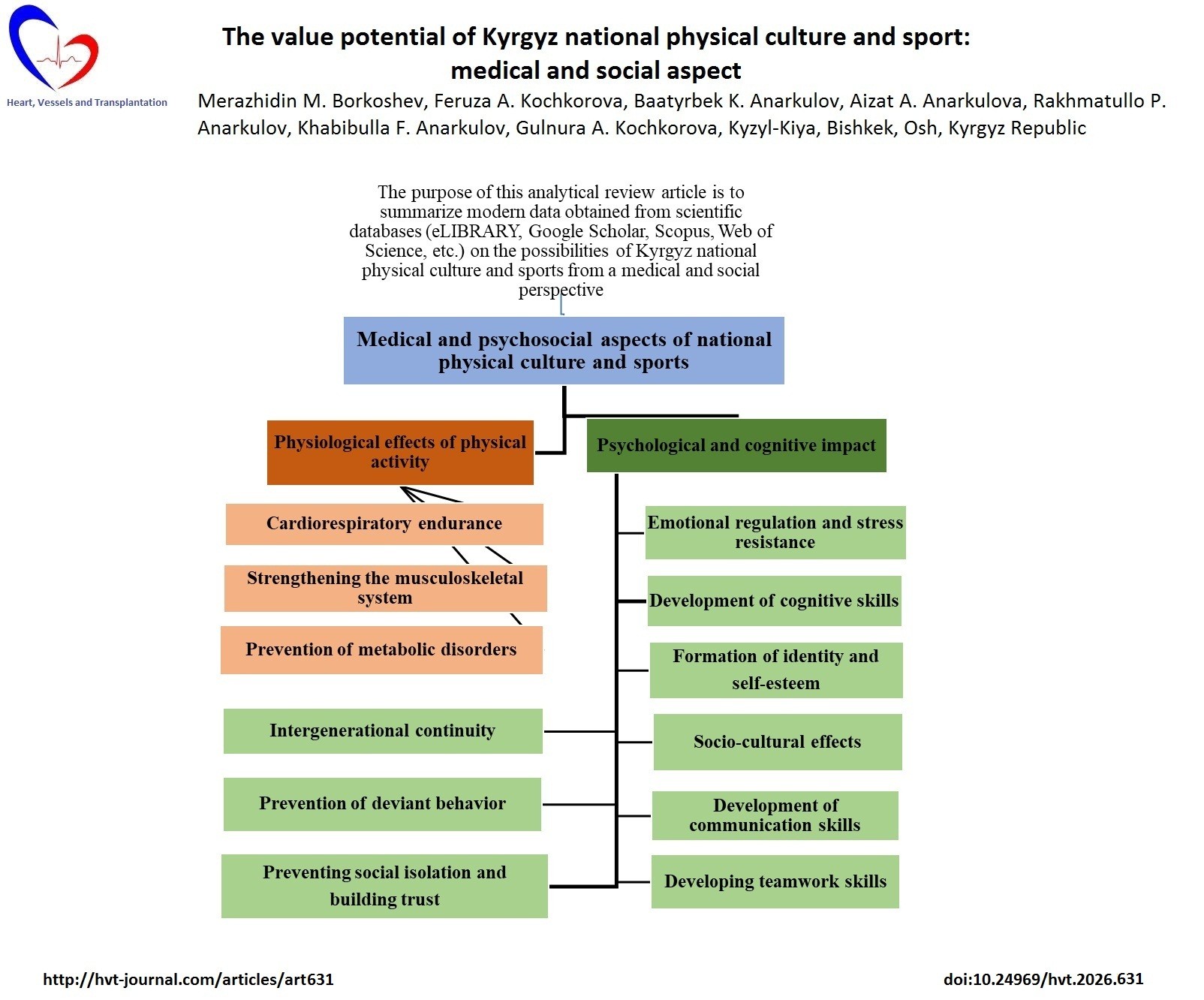
Graphical abstract
Introduction
Kyrgyzstan is a predominantly mountainous country: over 90% of its territory is located in mid- and high-altitude areas. These natural and geographical features have largely determined the specific development of Kyrgyz national physical culture and sport. Traditional movement practices, developed in the context of high-altitude nomadic life, are distinguished by their high functional focus, adaptive potential, and pronounced health benefits.
This fact has been widely studied in various fields of scientific knowledge. The impact of mountain climate on the human body has been most thoroughly explored in climatology, medicine, physiology, biology, and sports science. Scientific studies have detailed the body's adaptive responses to hypoxia, the specifics of metabolic and cardiorespiratory changes, and the impact of the mountain environment on physical performance and endurance.
However, despite the favorable natural conditions for physical activity developed in the high-altitude environment and traditional nomadic lifestyle, in the modern era, the natural mechanisms for developing physical activity in children and adolescents are gradually being lost. The gap between the historically established way of life and modern socio-cultural conditions leads to a decline in daily physical activity.
As a result, the deteriorating health of the younger generation is becoming one of the key medical and social challenges for the healthcare systems of post-Soviet countries, including Kyrgyzstan.
According to educational and medical monitoring data, the number of schoolchildren with physical inactivity, poor posture and scoliotic deformities, poor vision, excess weight, anxiety and depressive symptoms, and reduced stress tolerance is increasing annually.
One significant factor is the distance children receive from the natural forms of physical activity characteristic of the traditional Kyrgyz environment, where physical activity was organically integrated into everyday life. Regular physical activity and sports throughout life have been shown to be associated with a longer, healthier lifespan and delay the development of more than 40 chronic diseases (1).
Historically, Kyrgyz nomadic culture developed a complex of physical activity, including the development of endurance (long journeys), functional strength (working with animals and farming), coordination and balance (horseback riding), playing skills (ordo, ak chɵlmɵk), and martial arts (kүrɵsh) (Fig. 1). From an early age, Kyrgyz boys were trained in horseback riding, swordsmanship, archery (Fig. 2), and foot and horse wrestling (2). These forms of physical activity served as a natural means of preventing many diseases and functional disorders characteristic of the modern lifestyle.
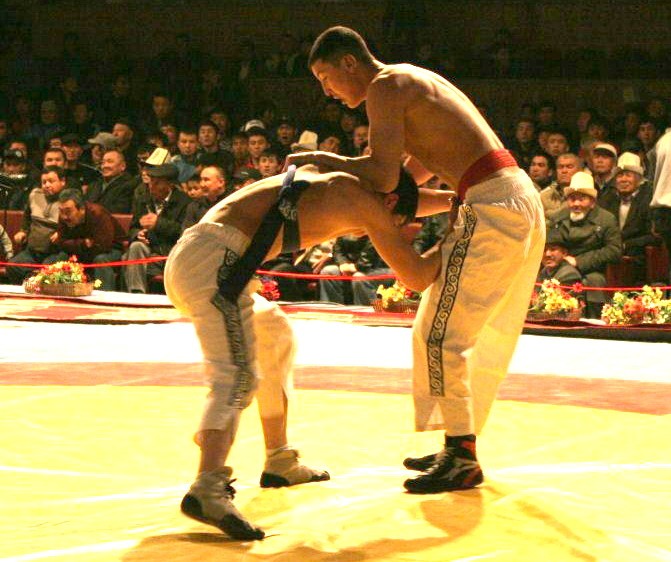
Figure 1. Kuresh.
(Republished from free source -https://sport.kg/uploads/posts/2014-04/13976363492_ikonka.jpg)
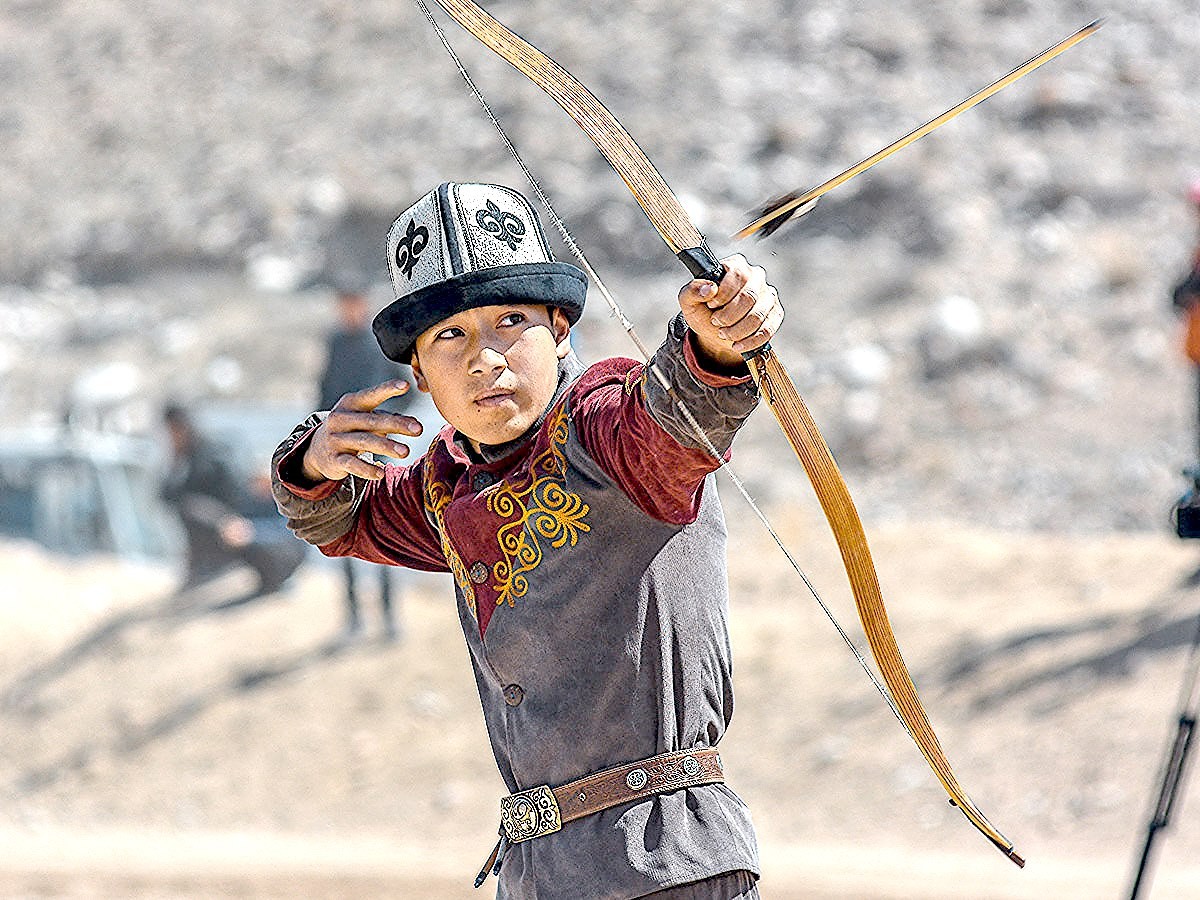
Figure 2. Archery.
(Republished from free source -https://sport.kg/uploads/posts/2022-08/1661439626_salbuurun-den-nezavisimosti.jpg)
In today's world, the use of national forms of physical education is considered a strategically important area of preventive medicine and public health. National sports and game practices are highly adaptable, emotionally appealing, and culturally acceptable, making them an effective tool for improving the health of children and adolescents (3, 4).
Kyrgyz national physical culture and sport are an integral part of the material, spiritual, and moral heritage of the people. Since the Republic's independence, interest in national physical culture has grown as a social phenomenon and a factor in sustainable personal development.
National physical culture is a unique phenomenon of the shared culture of an ethnic group, serving as a link between the past and present stages of societal development, and between the social and biological aspects of human development. It is one of the first and most fundamental forms of culture, formed through everyday life. National sports and games have significant potential to influence physical health, spiritual and moral values, and the psycho-emotional state of the individual.
While the influence of national sports and games on maintaining and strengthening health, physical development, and morphofunctional indicators is beyond doubt, their role in shaping spiritual values requires additional scientific substantiation.
The values of national physical culture and sport should be considered at two levels: societal and individual. The mechanism by which societal values are transformed into personal assets is crucial. Values, as socially conditioned components of culture, shape stable notions of what is significant and desirable and become part of the individual's spiritual world.
Each historical era and each people possess their own value system, reflecting the specific characteristics of their culture and way of life.
In this context, national physical culture and sport act not only as a means of physical development, but also as an important medical and social resource for strengthening health, preventing diseases, and promoting the harmonious development of the individual in the context of modern sociocultural transformations.
The purpose of this analytical review article is to summarize modern data obtained from scientific databases on the possibilities of Kyrgyz national physical culture and sports from a medical and social perspective.
Methods
This article examines the value potential of Kyrgyz national physical culture and sports from the perspective of the medical and social health of the population. A literature search was conducted in eLIBRARY, Google Scholar, Scopus, Web of Science, and national scientific sources for the period 2000–2024, using the keywords: "Kyrgyz national physical culture," "national sports," "traditional sports," "physical culture values," "population health," "medical and social aspects," and "impact on health."
Over 400 publications were initially identified, of which 254 were selected for analysis after removing duplicates and irrelevant sources. In the next step, 150 publications were examined in their full texts and excluded for the following reasons: lack of analysis of the value or medical-social component (n = 71), descriptive nature without scientific justification (n = 37), publications in non-peer-reviewed sources (n = 37) and methodological shortcomings (n = 5). In the final stage, 104 sources were included in the review, including peer-reviewed articles, books, monographs, and official international documents.
The literature selection process is presented in the flowchart (Fig. 3).
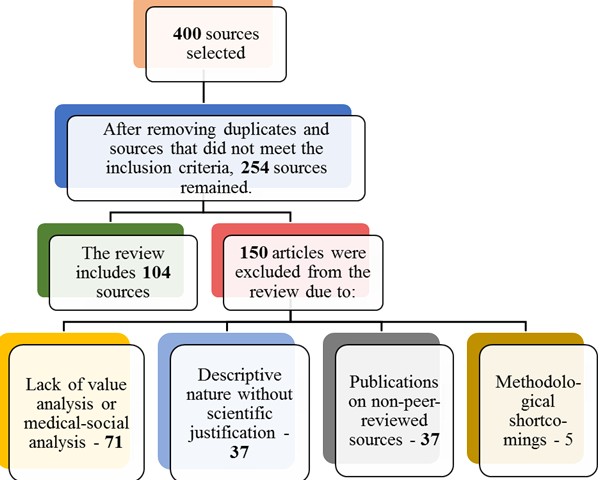
Figure 3. Flowchart of studies` search and selection
The study's methodological framework included analytical, comparative-historical, systemic, and content analysis. Particular attention was paid to the impact of traditional forms of physical activity and national sports on physical, mental, and social health, the development of value orientations, the strengthening of social cohesion, and the preservation of cultural heritage. An analysis of the sources confirmed that Kyrgyz national physical culture has preventive potential for chronic diseases, promotes a healthy lifestyle, and plays a significant role in medical and social rehabilitation and the education of the younger generation.
Physiological Effects of Physical Activity
Cardio-respiratory endurance
Cardiorespiratory endurance is a key indicator of physical health and physical activity, especially in childhood and adolescence. Physical performance is largely determined by the functional state of the cardiorespiratory system. A close relationship has been established between indicators of its functional state and the level of physical performance in athletes of various age groups participating in various sports.
A child's body is characterized by intensive growth and development processes, with organs and systems actively developing, making it highly sensitive to physical activity. Regular physical activity in childhood helps increase the body's functional and adaptive reserves, improve health, and enhance physical and mental performance (5, 6).
Cardiorespiratory fitness is considered a clinical indicator reflecting the body's ability to transport and utilize oxygen during aerobic muscular activity. Low levels of cardiorespiratory fitness are a significant risk factor for cardiovascular disease and are associated with increased cardiovascular mortality (7- 10).
At the same time, numerous studies emphasize that high levels of cardiorespiratory fitness are developed primarily through regular aerobic exercise of moderate and variable intensity, characterized by duration, cyclicity, and the involvement of large muscle groups.
From this perspective, traditional forms of active exercise, historically ingrained in the people's culture and possessing significant health benefits, are of particular interest. In particular, traditional Kyrgyz group games such as ``ordo, ``arkan tartysh``, ``alaman baige``, ``kyz kuumai``, and others can be considered a natural form of aerobic exercise, seamlessly combining physical activity, competition, and social interaction.
Traditional Kyrgyz team sports are divided into those involving aerobic and mixed (aerobic-anaerobic) physical activity, including running and relay races, jumps, frequent changes in direction, team competitions, and dynamic game exercises. This complex nature of movement strengthens the cardiovascular system, improves respiratory function, increases maximum oxygen consumption (VO₂ max), and develops overall endurance and motor coordination (11-13).
Regular participation in team sports promotes the development of sustainable physical activity habits, reducing the risk of physical inactivity, obesity, and associated metabolic disorders. Motivation plays a significant role: social support, teamwork, and a competitive nature increase participant engagement and promote high levels of physical activity throughout the game session, making the exercise aerobically effective and sustainable over time (14-16).
Strengthening the musculoskeletal system
Strength, physical fitness, balance, and agility have been key functional abilities necessary for survival throughout human history. For our ancestors, these qualities developed naturally through everyday physical activity related to hunting, traveling over rough terrain, working, and defending themselves. Therefore, strength and coordination abilities initially developed as an adaptive response to life's challenges. The primary function of strength training is to develop and maintain muscle mass, and regular physical activity promotes muscle health, strength, balance, and overall functional efficiency (17, 18).
With age, there is a natural decline in muscle mass and strength, which accelerates after age 60. Degenerative loss of skeletal muscle mass (sarcopenia) and strength (dynapenia) is closely associated with aging and is accompanied by an increased risk of falls, functional impairment, and decreased mobility (19). These changes are due to both neural factors (loss of alpha motor neurons) and morphological changes in muscle tissue, including a decrease in the number and volume of type II fibers (20). However, these age-associated processes are not irreversible, since numerous studies confirm the high effectiveness of strength training in increasing muscle strength and mass, as well as in slowing down or partially reversing age-related changes (21). Borde et al. (22) showed a significant improvement in muscle strength in healthy elderly people with regular strength training, and a positive effect was observed for both the upper and lower extremities. It has been established that performing strength exercises 2-3 times a week, either alone or in combination with other forms of activity, effectively contributes to the development of muscle strength (23).
The American College of Sports Medicine emphasizes the importance of incorporating bone-strengthening exercises into physical activity, such as axial-loading exercises (tennis, stair climbing, jogging), jumping exercises (volleyball, basketball), and strength training, including weight lifting (24). These recommendations directly align with traditional forms of physical activity found in traditional sports and folk games.
Effective interventions for stimulating bone growth and maintaining bone mass rely on mechanical loading on bone, which occurs during aerobic, weight-bearing, and strength exercises (25). Balance exercises should include progressively more complex poses, a reduced support surface, dynamic shifts in the center of gravity, stress on postural muscles, and reduced sensory input. Such elements are fully present in traditional Kyrgyz team games, where participants constantly change direction, perform jumps, sudden stops, throws, and balance exercises.
Furthermore, gradually increasing forces applied to bone during physical activity stimulate adaptation processes through bone cell deformation (24). Systematic reviews confirm the effectiveness of strength and resistance training in slowing age-related decline in bone mineral density (11, 26, 27).
In this context, Kyrgyz national team games, which play a significant role in the development and strengthening of the musculoskeletal system in children and adolescents, deserve special attention. Dynamic game actions—running, jumping, squats, throwing, maintaining balance, and frequent changes in direction—provide a comprehensive effect on muscles, joints, and bones, promoting the development of muscle strength, coordination, flexibility, and general motor fitness. Regular participation in such games during periods of active growth promotes correct posture, strengthens ligaments, and develops joint mobility.
Research shows that engaging children in active play practices increases bone density and reduces the risk of musculoskeletal disorders, including scoliosis, flat feet, and weak core muscles (14, 15).
The team-based nature of Kyrgyz folk games helps children develop skills in distributing effort, controlling their own body, and coordinating movements with partners. This not only improves physical performance but also reduces the risk of injury due to the natural, varied, and gradually increasing load (16, 28).
Рrevention of metabolic disorders
Metabolic syndrome is one of the most significant medical and social problems in modern society, affecting approximately a quarter of the world's adult population (29, 30). Metabolic disorders significantly increase the risk of developing type 2 diabetes, cardiovascular disease, and premature mortality (30-32).
Type 2 diabetes is closely associated with insulin resistance and often develops in parallel with obesity, hypertension, and lipid metabolism disorders, increasing the risk of stroke and myocardial infarction (33, 34).
Modern research emphasizes the leading role of physical activity in the prevention and correction of metabolic disorders. Aerobic exercise improves cardiorespiratory endurance, glycemic control, and lipid profile, while strength training promotes increased muscle mass, decreased fat deposits, and increased tissue sensitivity to insulin (35). Although strength training has traditionally been considered an adjunct to aerobic exercise, accumulated evidence indicates comparable and, in some cases, superior effectiveness in reducing cardiovascular risk factors (33).
Of particular significance is the fact that fat mass is more closely associated with cardiovascular mortality than body mass index (36). In this context, strength training acquires important preventative value, as it promotes fat loss and stimulates the release of myokines, which play a key role in regulating lipid metabolism and activating anti-inflammatory mechanisms (37, 38). Conversely, excess adipose tissue functions as an endocrine-active organ, serving as a source of chronic systemic inflammation underlying the development of metabolic and cardiovascular diseases (39).
From this perspective, Kyrgyz national sports and traditional team games are of particular interest, as their structure naturally combines aerobic and anaerobic components of physical activity. Such activities, including running, abrupt changes in direction, jumping, throwing, wrestling, and strength resistance, are particularly effective in correcting metabolic syndrome.
Regular participation in sports helps maintain normal blood glucose levels, improve insulin sensitivity, and normalize lipid profiles, which is supported by data on the positive impact of physical activity on metabolic health (15, 40). The combination of aerobic and strength training in dynamic team games reduces the risk of obesity, a key factor in the development of metabolic syndrome in childhood and adolescence (41, 42).
Psychological and Cognitive Impact
Emotional regulation and stress resilience
Emotional regulation and stress resilience are important components of social adaptation and individual well-being. Modern psychological and sociological research emphasizes that the ability to manage emotional reactions, adequately cope with stressful situations, and recover from emotional tension is developed primarily through social interaction and practical activities (43-45). Particularly important are forms of activity that combine physical, cognitive, and emotional components.
Exercises combining physical movement, cognitive focus, and deep breathing have been shown to effectively reduce stress levels and improve psychological well-being (46). Sustained attention to present-moment experiences strengthens functional connections between the default mode network and executive control areas, leading to improved attention, emotional regulation, and metacognitive awareness (47, 48).
National games traditionally include elements of concentration, ritualized interaction, and collective attention, creating conditions for developing self-regulation skills. Through participation in such games, players learn to control emotional reactions, focus on the actions being performed, and respond appropriately to the behavior of other participants. Regular participation in national games helps strengthen resilience, as participants practice maintaining emotional balance and adapting to the social and physical challenges of the gaming environment.
Play involves alternating successes and failures, competitive elements, adherence to rules, and decision-making under uncertainty. In these conditions, participants develop impulse control, learn to cope with frustration, regulate aggression, and adapt flexibly to changing game situations. Modern research in the field of physical activity and play practices shows that group and traditional games reduce emotional stress and anxiety, promoting the development of effective coping strategies and increasing stress resilience (11, 15). The emotionally charged yet socially controlled nature of play allows for the safe experience of intense emotions and the development of socially acceptable ways of expressing them.
The collective nature of Kyrgyz games is particularly significant, with emotional support from the group and a sense of community serving as important factors for psychological protection. Research confirms that social support during shared activities significantly reduces the negative impact of stress and promotes the development of psychological resilience (49, 50).
Physical and mental training have a significant impact on neuroplasticity, promoting a state of psychophysiological calm and reducing levels of stress hormones, particularly cortisol (51). It has been emphasized that chronically elevated cortisol levels have an adverse effect on brain health and cognitive functioning (52). For example, yoga combines physical activity, breathing techniques, and mindfulness, which is associated with improved cognitive function, the development of emotional regulation, and structural changes in the brain (52-54).
Similar mechanisms can be identified in traditional Kyrgyz sports, which include not only physical activity but also elements of concentration, self-control, breathing regulation, and emotional restraint. Activities such as wrestling, equestrian sports, and team competitions require sustained attention, quick decision-making, and emotional management under physical and social stress. Regular participation in Kyrgyz sports practices can help reduce stress, strengthen neural pathways associated with cognitive control and emotional regulation, and develop psychological resilience.
Cognitive development
Physical activity is a powerful non-drug treatment and preventative measure that helps improve cognitive function. Regular exercise stimulates neuroplasticity, improves cerebral blood flow, and promotes the production of neurotrophic factors, which collectively positively impacts mental performance and learning.
Kyrgyz team games have a significant impact on the development of attention, memory, logical thinking, as well as planning and decision-making skills. Game activities present participants with tasks of varying complexity, requiring situational analysis, predicting the actions of other players, choosing the optimal strategy, and promptly adjusting behavior in real time (55- 57). Problem-solving and critical thinking skills are developed through collaborative game activities. Team games require coordination, role-playing, and adaptation to constantly changing conditions, which contributes to the development of strategic thinking and the ability to make collective decisions (28). Modern research confirms that game and physical activity improve cognitive flexibility, information processing speed, and attention span, which is especially important for children and adolescents (28, 58-60).
Furthermore, aerobic exercise increases heart rate and improves cerebral blood flow, promoting more efficient delivery of oxygen and nutrients to neural tissue.
Heart, Vessels and Transplantation 2026; 10: doi: 10.24969/hvt.2026.631
 Medical and social effect of Kyrgyz national sports Borkoshev et al.
This is accompanied by an increase in brain-derived neurotrophic factor levels, which leads to improved memory, learning ability and overall cognitive performance (61, 62).
Strength training, in turn, contributes to increased muscle strength and endurance, and stimulates the production of myokines—biologically active proteins secreted by skeletal muscles. These substances have a neuroprotective effect, enhance synaptic plasticity, and promote the growth of new neurons (63). As a result, improved executive functions, working memory, and concentration are observed, as well as reduced levels of neuroinflammation and oxidative stress, which positively impacts cognitive health. Physical activity promotes the production of internal antioxidants, such as superoxide dismutase and glutathione, which help counteract harmful free radicals. The presence of this protective effect is important for maintaining the health and functioning of neurons, promoting increased neuroplasticity and cognitive resilience (64). Traditional Kyrgyz games, by integrating cultural and social components, contribute to the development of metacognitive skills, including the ability to analyze one's own actions, predict their consequences, and take into account the interests of other participants.
Group games have significant educational and psychosocial impact. They develop motor planning, spatial thinking, self-control, and communication skills, and also create conditions for the development of teamwork and mutual assistance (45).
Formation of Identity and Self-Esteem
The formation of human identity occurs through the understanding of social roles performed and is considered a dynamic system developing through the interaction of individual characteristics and the social environment (65, 66).
Kyrgyz national sports (kök börü, alysh, ordo, toguz korgool) extend beyond physical activity and acquire a pronounced cultural and symbolic significance, being linked to historical memory, ethnicity, and traditional values of Kyrgyz society. Participation in national sports fosters a strong sense of group identification and social recognition, which is an important condition for the development of self-awareness and the individual's integration into the sociocultural space.
The self-esteem of athletes involved in national sports is largely determined by the level of perceived competence, the success of fulfilling a social role, and the degree of social approval from significant others and the community as a whole (67, 68). Collective Kyrgyz traditional games also play an important role in the formation of personal identity and self-esteem, as they provide social recognition, a sense of belonging to a cultural tradition, and a positive experience of one's own significance within the group.
In the traditional sports environment of Kyrgyz society, these needs are often realized through the continuity of generations, a mentoring system, and public recognition of sporting achievements.
Developing a sporting identity in national sports can contribute to increased self-confidence, personal resilience, and successful socialization, as well as facilitate transitions between stages of a sporting career (69-71). However, excessive focus on the athlete's role and identity closure can limit the exploration of alternative social and professional roles, potentially leading to decreased self-esteem, emotional burnout, and difficulties during the retirement period (72-74).
Through collaborative gaming activities, participants receive social feedback, a safe space for experimenting with roles and behavior patterns, and an awareness of their role in the group and their own capabilities, which contributes to the development of a positive self-image and an understanding of one's social position (28, 68, 75).
Modern research also emphasizes that participation in team and traditional games strengthens not only an individual sense of self-worth but also a collective sense of community, shaping an ethnocultural identity (76).
Psycho-social-cultural effects
Social integration is considered a key mechanism for the sustainable functioning of traditional societies, ensuring the inclusion of individuals in a system of social connections, norms, and values (28). In traditional Kyrgyz culture, collective folk games play a significant role in this process, historically serving not only entertainment but also a significant social and educational function (77). Through participation in shared gaming activities, individuals learn social roles, norms of interaction, and collective values, which contributes to their inclusion in the community and the formation of a stable social identity.
Most Kyrgyz games are collective in nature and are based on principles of shared participation, mutual responsibility, and coordination. Modern research on play confirms that collective play is a stable form of social interaction, where behavior patterns, communication skills, and cultural meanings are formed (28, 78).
Active socialization in a community correlates with a longer and healthier life. People with the most integrated social lives have the best prognosis for heart attacks, strokes, HIV/AIDS, and cancer, among other diseases.
Heart, Vessels and Transplantation 2026; 10: doi: 10.24969/hvt.2026.631
 Medical and social effect of Kyrgyz national sports Borkoshev et al.
Social integration has a powerful impact on health by strengthening meaningful social roles and attachments, as well as by facilitating access to resources and material goods through social networks (79, 80).
Childhood conditions and circumstances have been shown to influence health in older age (81, 82). This underscores the particular importance of early forms of social integration, including play and sports practices in childhood and adolescence, as factors that contribute to the development of sustainable behavioral and psychosocial resources throughout life. Therefore, it is necessary to encourage young people to join sports clubs, where they have the opportunity to establish interpersonal connections, develop leadership skills, and realize their personal potential (83).
Team and individual sports are traditionally viewed as effective means of teaching cooperation, communication, trust, and respect for teammates (84, 85). Participation in competitions and training with peers allows adolescents to make friends, expand social connections, and develop a sense of community. Through such experiences, adolescents not only increase self-confidence and emotional resilience but may also be motivated to volunteer, raise awareness of social issues, and contribute to the public good (86).
Developing collaboration skills
Collective Kyrgyz games create a unique communicative space, involving constant verbal and nonverbal interaction between participants. During the game, information is continuously exchanged, actions are coordinated, and participants respond quickly to each other's behavior, which contributes to the development of active listening skills, clear expression of thoughts, and consideration of other participants' positions (28). Due to the repetitive nature of game situations and the need for joint decision-making, communication acquires a meaningful and functional character, aimed at achieving a collective outcome.
Modern psychological and pedagogical research confirms that game-based activities are an effective model of social communication, through which social roles, norms of interaction, and forms of collective responsibility are learned.
Adolescent participation in training and competitions promotes the development of communication skills through regular interaction with peers and involvement in joint activities (84, 85). In team sports, in particular, adolescents learn to effectively exchange information, express their own position, consider the opinions of their teammates, and constructively resolve interpersonal conflicts, which strengthen intra-team communication and promote social integration (87- 89).
Data indicate that the level of acceptance of teammates and the quality of communication in conflict situations are key predictors of social cohesion and the effectiveness of team interactions (87). This indicates that communication processes in sports and traditional team games have similar structural characteristics and perform comparable social developmental functions.
Developing teamwork skills
Group games promote the development of teamwork skills by requiring constant coordination, role assignment, and shared decision-making. Joint activities in a game-like format enhance a sense of group belonging and promote the development of sustainable collaboration skills (28). In a group game, individual actions acquire meaning only in conjunction with the actions of other participants, which fosters a focus on a shared outcome.
Group activities with shared goals and assigned roles promote the development of coordination skills, mutual support, and collective decision-making (84-90).
In Kyrgyz traditional games, team competition or joint goal achievement fosters an awareness of the interdependence of individual and collective success, which enhances the social integration potential of game activities. Participation in such games fosters an understanding of responsibility to the group, as well as a willingness to subordinate personal interests to collective goals, which is an important component of social adaptation. Scientific research shows that adolescent participation in team sports is positively associated with the development of a sense of belonging and more effective interactions with peers, which confirms their significant role in the process of social integration (85, 91).
Preventing social isolation and building trust
Collective games in traditional Kyrgyz society have historically served as a natural mechanism for integrating individuals into the social environment, reducing the risk of social isolation and alienation. Through regular participation in shared gaming activities, individuals were drawn into stable social connections, learned norms of interaction, and developed a sense of community. Modern research confirms that systematic participation in shared gaming practices strengthens interpersonal bonds, increases emotional engagement, and develops sustainable forms of social interaction.
The development of trust during gaming is closely linked to adherence to established rules, mutual support, and collective responsibility for outcomes. Such forms of shared activity contribute to the accumulation of social capital, strengthening trust networks, and developing mutual commitments within the group (28). In this context, Kyrgyz folk games serve not only as a form of leisure but also as a sustainable mechanism for social integration, ensuring the reproduction of cultural norms and collective identity.
Similar processes are observed in modern sports. Regular participation in sports training and competitions allows adolescents to expand their social network, form friendships, and develop a sense of community, thereby reducing the risk of social isolation (85, 92, 93).
Sports teams create favorable conditions for the development of trust, mutual respect, and emotional support, which is especially important during adolescence (84, 87). Adolescent participation in sports activities, especially team sports, significantly enhances a sense of belonging and the quality of interactions with peers, even if these effects do not always translate into broader social or civic engagement (88).
Prevention of deviant behavior
Prevention of deviant behavior is an important aspect of social integration, especially among children and youth. Contemporary sociological and psychological-pedagogical research views deviant behavior as a result of a lack of social inclusion, weakening of social ties, and a lack of constructive forms of collective activity (43).
Collective Kyrgyz games are an effective tool for preventing deviant behavior, as they create a normatively organized space for social interaction based on rule-based compliance, role distribution, and collective responsibility. Participation in structured group activities promotes self-control, reduces aggression, and fosters socially acceptable behavior patterns.
Involvement in traditional gaming practices fosters a positive social identity and a sense of belonging, which is an important factor in reducing the risk of antisocial and deviance (28).
Of particular importance is the educational potential of Kyrgyz folk games, which convey cultural norms of mutual respect, fairness, and collective responsibility. Through gaming, social norms and mechanisms of informal social control are internalized, which is particularly important in the primary socialization of children and adolescents (43).
Modern sport also serves as a significant protective factor, offering adolescents a constructive alternative to antisocial behavior, including delinquency and alcohol or drug abuse (91, 94, 95).
Participation in sports clubs and extracurricular physical activity programs promotes self-discipline, responsibility, and a focus on socially approved norms of behavior (90, 95). Furthermore, involvement in sports activities reduces the likelihood of social marginalization, which is often considered a predictor of deviant behavior (96).
Intergenerational continuity
Intergenerational continuity is considered in modern humanities research as one of the key mechanisms for preserving cultural identity and the sustainability of traditional communities. The transmission of cultural norms, values, and behavioral patterns between generations occurs primarily through repetitive social practices with symbolic and educational potential, including traditional folk games (97, 98).
Collective Kyrgyz games serve as a significant tool for the intergenerational transmission of cultural experience, as they involve representatives of different age groups. Through shared play, the older generation transmits to the younger generation not only game skills and rules but also socially approved behavioral patterns—respect for elders, collective responsibility, honesty, mutual assistance, and adherence to traditions (77). Thus, play functions as a form of "living tradition," ensuring the preservation of cultural memory.
Contemporary research in the field of intangible cultural heritage emphasizes that traditional games serve as informal education, contributing to the development of a stable ethnocultural identity in children and adolescents (99). Through game practice, cultural meanings and norms are internalized, strengthening the bond between generations and preventing the breakdown of tradition.
In the context of globalization and the transformation of forms of intergenerational interaction, collective game practices are acquiring particular significance as a means of preserving cultural continuity and social cohesion. Such forms of joint activity contribute to the strengthening of intergenerational solidarity and the resilience of local communities (28, 98). As a result, collective Kyrgyz games serve not only as an element of leisure but also as a mechanism for the reproduction of cultural meanings and values.
Sports clubs and teams integrated into the structure of local communities also facilitate the transmission of values, norms, and behavior patterns from older to younger generations (100, 101). Adolescents' participation in sport and community initiatives, such as charity events and volunteer projects, creates opportunities for interaction with mentors, coaches, and community representatives, strengthening intergenerational bonds (102). This continuity promotes social responsibility, civic awareness, and a strong sense of community belonging, even if the direct impact of sport on social engagement requires additional institutional and educational support (94, 103, 104).
Study limitations
The review has an analytical-descriptive character and is based on diverse sources, that limit qualitative evaluation and equating of results. Empirical data on medical and social effects of Kyrgyz national sports in children remains insufficient, and results cannot be extrapolated on other sociocultural conditions and cultural significance of the topic increases risk of biased interpretation and underestimation of possible risks.
Gaps in knowledge and directions for future research
Currently the long-term effects of national sports on cardiometabolic health of children and their effect on prevention of overweight remain less investigated. Data on influence of these forms of physical activity on cognitive and psychological development including formation of decision-making skills, self-regulation, self-evaluation and resistance to stress are limited. The social effects as development of communicative skills, social integration and prevention of deviant behavior are insufficiently studied. Moreover, the systematic comparative studies on efficacy of national and modern physical activity in children and teenagers are lacking. Above-mentioned issues should be addressed in future studies.
Conclusion
The analysis shows that Kyrgyz national physical culture and traditional sports represent a multidimensional medical and psychosocial resource for health, with significant health-promoting, psychoregulatory, and sociocultural potential. Developed in high-altitude environments and a nomadic lifestyle, these forms of physical activity combine aerobic and strength training, coordination elements, and social interaction, which may determine their functional and adaptive value.
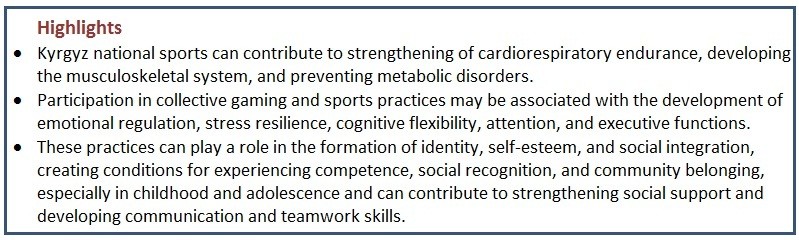
The results indicate that traditional sports can contribute to strengthening cardiorespiratory endurance, developing the musculoskeletal system, and preventing metabolic disorders. Along with physiological effects, their potential psychological and cognitive impact is noted: participation in collective gaming and sports practices may be associated with the development of emotional regulation, stress resilience, cognitive flexibility, attention, and executive functions. In this context, national games can be viewed as forms of social interaction that integrate physical, cognitive, and emotional processes in a culturally significant environment.
It appears that these practices could play a role in the formation of identity, self-esteem, and social integration, creating conditions for experiencing competence, social recognition, and community belonging, especially in childhood and adolescence. The collective nature of Kyrgyz games could contribute to strengthening social support and developing communication and teamwork skills.
Thus, Kyrgyz national physical culture and traditional sports could be viewed not only as elements of cultural heritage but also as a potential resource for preventive medicine and public health. The inclusion of traditional games and national sports in educational and health programs could be recommended as a promising approach to improving the physical and mental health of children and youth, which requires further empirical evaluation and scientific substantiation of the effectiveness of their systemic integration.
Peer-review: External and internal
Conflict of interest: None to declare
Authorship: M.M.B., F.A.K., B.K.A., A.A.A., R.P.A., K.F.A., and G.A.K equally contributed to preparation of manuscript and fulfilled all authorship criteria
Acknowledgements and funding: None to declare
Statement on A.I.-assisted technologies use: The authors did not use AI-supported technologies in the preparation of this manuscript.
Data and material availability: Does not apply
References
| 1.Ruegsegger GN, Booth FW. Health Benefits of Exercise. Cold Spring Harb Perspect Med 2018; 8: a029694. doi: 10.1101/cshperspect.a029694 https://doi.org/10.1101/cshperspect.a029694 PMid:28507196 PMCid:PMC6027933 |
||||
| 2.Azizbaev SS. Historical information on the development of Kyrgyz traditional games and competitions. TJLA 2020; 2. Available at URL: URL: https://cyberleninka.ru/article/n/istoricheskie-svedeniya-o-razvitii-kyrgyzskih-traditsionnyh-igr-i-sostyazaniy (date of access: 01/28/2026). | ||||
| 3.Strong WB, Malina RM, Blimkie CJ, Daniels SR, Dishman RK, Gutin B, et al., Evidence based physical activity for school-age youth. J Pediatr 2005; 146: 732-7. doi: 10.1016/j.jpeds.2005.01.055 https://doi.org/10.1016/j.jpeds.2005.01.055 PMid:15973308 PMCid:PMC3654879 |
||||
| 4.Janssen I, Leblanc AG. Systematic review of the health benefits of physical activity and fitness in school-aged children and youth. Int J Behav Nutr Phys Act. 2010 May 11;7:40. doi: 10.1186/1479-5868-7-40. https://doi.org/10.1186/1479-5868-7-40 PMid:20459784 PMCid:PMC2885312 |
||||
| 5.Kraynova IN, Aleksina YuA, Shcherbakova AN, Makarova AA. Characteristics of the cardiovascular system in young athletes. Modern Probl Sci Educ 2023; 5: Doi: 10.17513/spno.32993 https://doi.org/10.17513/spno.32993 |
||||
| 6.Rylova NV, Zholinsky AV. Indicators of physical development and health status of children involved in sports. Pract Med 2017; 1: 75-81 | ||||
| 7.Theodore RF, Broadbent J, Nagin D, Ambler A., Hogan S., Ramrakha S., et al., Childhood to early-midlife systolic blood pressure trajectories: Early-life predictors, effect modifiers, and adult cardiovascular outcomes. Hypertension 2015; 66: 1108-15. doi: 10.1161/HYPERTENSIONAHA.115.05831 https://doi.org/10.1161/HYPERTENSIONAHA.115.05831 PMid:26558818 PMCid:PMC4646716 |
||||
| 8.Tian D, Meng J. Exercise for prevention and relief of cardiovascular disease: prognoses, mechanisms, and approaches. Oxid Med Cell Longev. 2019 Apr 9;2019:3756750. doi: 10.1155/2019/3756750 https://doi.org/10.1155/2019/3756750 PMid:31093312 PMCid:PMC6481017 |
||||
| 9.Chen X, Wang Y. Tracking of blood pressure from childhood to adulthood: a systematic review and meta-regression analysis. Circulation 2008; 117: 3171-80. doi: 10.1161/CIRCULATIONAHA.107.730366 https://doi.org/10.1161/CIRCULATIONAHA.107.730366 PMid:18559702 PMCid:PMC3568631 |
||||
| 10.Lurbe E, Thijs L, Torro MI, Alvarez J, Staessen JA, Redon J. Sexual dimorphism in the transition from masked to sustained hypertension in healthy youths. Hypertension 2013; 62: 410-4. doi: 10.1161/HYPERTENSIONAHA.113.01549 https://doi.org/10.1161/HYPERTENSIONAHA.113.01549 PMid:23734004 |
||||
| 11.Eime RM, Young JA, Harvey JT, Charity MJ, Payne WR. A systematic review of the psychological and social benefits of participation in sport for adults: informing development of a conceptual model of health through sport. Int J Behav Nutr Phys Act 2013; 10: 135. doi: 10.1186/1479-5868-10-135 https://doi.org/10.1186/1479-5868-10-135 PMid:24313992 PMCid:PMC4028858 |
||||
| 12.Khalafi M, Sakhaei MH, Habibi Maleki A, Rosenkranz SK, Pourvaghar MJ, Fang Y, et al. Influence of exercise type and duration on cardiorespiratory fitness and muscular strength in post-menopausal women: a systematic review and meta-analysis. Front Cardiovasc Med 2023; 10: 1190187. doi: 10.3389/fcvm.2023.1190187 https://doi.org/10.3389/fcvm.2023.1190187 PMid:37229231 PMCid:PMC10204927 |
||||
| 13.Chaddock-Heyman L, Hillman CH, Cohen NJ, Kramer AF. III. The importance of physical activity and aerobic fitness for cognitive control and memory in children. Monogr Soc Res Child Dev 2014; 79: 25-50. doi: 10.1111/mono.12129 https://doi.org/10.1111/mono.12129 PMid:25387414 |
||||
| 14.Bailey R, Hillman C, Arent S, Petitpas A. Physical activity: An underestimated investment in human capital?. J Phys Activ Health 2013; 10: 289-308. doi: 10.1123/jpah.10.3.289 https://doi.org/10.1123/jpah.10.3.289 PMid:23620387 |
||||
| 15.Lubans D, Richards J, Hillman C, Faulkner G, Beauchamp M, Nilsson M, et al. Physical activity for cognitive and mental health in youth: a systematic review of mechanisms. Pediatrics 2016; 138: e20161642. doi: 10.1542/peds.2016-1642. https://doi.org/10.1542/peds.2016-1642 PMid:27542849 PMCid:PMC8772256 |
||||
| 16.Howie EK, Schatz J, Pate RR. Physical activity and cognitive development in children. Pediatr Exercise Scie 2019; 31: 529-38. | ||||
| 17.Kokko S, Oja P, Foster C, Koski P, Laalo-Häikiö E, Savola J. Sports Club for Health-Guidelines for health-oriented sports activities in a club setting. Helsinki, Finland: Finnish Sport for All Association; 2011. | ||||
| 18.Scholes S. Health survey for England 2016. Phys Activ Adults 2017. | ||||
| 19.Mitchell WK, Williams J, Atherton P, Larvin M, Lund J, Narici M. Sarcopenia, dynapenia, and the impact of advancing age on human skeletal muscle size and strength; a quantitative review. Front Physiol 2012; 3: 260. doi: 10.3389/fphys.2012.00260 https://doi.org/10.3389/fphys.2012.00260 PMid:22934016 PMCid:PMC3429036 |
||||
| 20.Aagaard P, Suetta C, Caserotti P, Magnusson SP, Kjaer M. Role of the nervous system in sarcopenia and muscle atrophy with aging: strength training as a countermeasure. Scand J Med Sci Sports 2010; 20: 49-64. doi: 10.1111/j.1600-0838.2009.01084.x https://doi.org/10.1111/j.1600-0838.2009.01084.x PMid:20487503 |
||||
| 21.Peterson MD, Rhea MR, Sen A, Gordon PM. Resistance exercise for muscular strength in older adults: a meta-analysis. Ageing Res Rev 2010; 9: 226-37. doi: 10.1016/j.arr.2010.03.004 https://doi.org/10.1016/j.arr.2010.03.004 PMid:20385254 PMCid:PMC2892859 |
||||
| 22.Borde R, Hortobágyi T, Granacher U. Dose-response relationships of resistance training in healthy old adults: A systematic review and meta-analysis. Sports Med 2015; 45: 1693-720. doi: 10.1007/s40279-015-0385-9 https://doi.org/10.1007/s40279-015-0385-9 PMid:26420238 PMCid:PMC4656698 |
||||
| 23.Foster C, Armstrong MEG. What types of physical activities are effective in developing muscle and bone strength and balance? J Frailty Sarcopenia Falls 2018; 3: 58-65. doi: 10.22540/JFSF-03-0584 https://doi.org/10.22540/JFSF-03-058 PMid:32300694 PMCid:PMC7155324 |
||||
| 24.Kohrt WM, Bloomfield SA, Little KD, Nelson ME, Yingling VR; American College of Sports Medicine. American College of Sports Medicine Position Stand: physical activity and bone health. Med Sci Sports Exerc 2004; 36: 1985-96. doi: 10.1249/01.mss.0000142662 https://doi.org/10.1249/01.MSS.0000142662.21767.58 PMid:15514517 |
||||
| 25.Howe TE, Shea B, Dawson LJ, Murray A., Downie F., Craig Ross C., et al.; Exercise for preventing and treating osteoporosis in postmenopausal women. Cochrane Database Syst Rev 2011; 7: CD000333. doi: 10.1002/14651858.CD000333.pub2 https://doi.org/10.1002/14651858.CD000333.pub2 |
||||
| 26.Zehnacker CH, Bemis-Dougherty A. Effect of weighted exercises on bone mineral density in post menopausal women. A systematic review. J Geriatr Phys Ther 2007; 30: 79-88. doi: 10.1519/00139143-200708000-00007 https://doi.org/10.1519/00139143-200708000-00007 PMid:18171491 |
||||
| 27.Gómez-Cabello A, Ara I, González-Agüero A, Casajús JA, Vicente-Rodríguez G. Effects of training on bone mass in older adults: a systematic review. Sports Med 2012; 42: 301-25. doi: 10.2165/11597670-000000000-00000 https://doi.org/10.2165/11597670-000000000-00000 PMid:22376192 |
||||
| 28.Amoroso JP, Coakley J, Rebelo-Gonçalves R, Antunes R, Valente-dos-Santos J, Furtado GE. Teamwork, spirit of the game and communication: A review of implications from sociological constructs for research and practice in ultimate frisbee games. Soc Sci 2021; 10: 300. doi: 10.3390/socsci10080300 https://doi.org/10.3390/socsci10080300 |
||||
| 29.Budoff M. Triglycerides and triglyceride-rich lipoproteins in the causal pathway of cardiovascular disease. Am J Cardiol 2016; 118: 138-45. https://doi.org/10.1016/j.amjcard.2016.04.004 PMid:27184174 |
||||
| 30.Wang HH, Lee DK, Liu M, Portincasa P, Wang DQ. Novel insights into the pathogenesis and management of the metabolic syndrome. Pediatr Gastroenterol Hepatol Nutr 2020; 23: 189-230. doi: 10.5223/pghn.2020.23.3.189 https://doi.org/10.5223/pghn.2020.23.3.189 PMid:32483543 PMCid:PMC7231748 |
||||
| 31.Yi SW, Park S, Lee YH, Park HJ, Balkau B, Yi JJ. Association between fasting glucose and all-cause mortality according to sex and age: a prospective cohort study. Sci Rep 2017; 7: 8194. doi: 10.1038/s41598-017-08498-6 https://doi.org/10.1038/s41598-017-08498-6 PMid:28811570 PMCid:PMC5557842 |
||||
| 32. Aroor AR, Whaley-Connell A, Sowers JR. Utility of obesity and metabolic dyslipidemia (a non-insulin based determinate of the metabolic syndrome and insulin resistance) in predicting arterial stiffness. J Clin Hypertens (Greenwich) 2019; 21: 1071-74. doi: 10.1111/jch.13615 https://doi.org/10.1111/jch.13615 PMid:31318126 PMCid:PMC6690773 |
||||
| 33.Mann S, Beedie C, Jimenez A. Differential effects of aerobic exercise, resistance training and combined exercise modalities on cholesterol and the lipid profile: review, synthesis and recommendations. Sports Med 2014; 44: 211-21. doi: 10.1007/s40279-013-0110-5 https://doi.org/10.1007/s40279-013-0110-5 PMid:24174305 PMCid:PMC3906547 |
||||
| 34.Mundi S, Massaro M, Scoditti E, Carluccio MA, Van Hinsbergh VW, Iruela-Arispe ML et al. Endothelial permeability, LDL deposition, and cardiovascular risk factors-A review. Cardiovasc Res 2018; 114:35-52. https://doi.org/10.1093/cvr/cvx226 PMid:29228169 PMCid:PMC7729208 |
||||
| 35.Williams MA, Haskell WL, Ades PA, Amsterdam EA, Bittner V, Franklin BA, et al. American Heart Association Council on Clinical Cardiology; American Heart Association Council on Nutrition, Physical Activity, and Metabolism. Resistance exercise in individuals with and without cardiovascular disease: 2007 update: a scientific statement from the American Heart Association Council on Clinical Cardiology and Council on Nutrition, Physical Activity, and Metabolism. Circulation 2007; 116: 572-84. doi: 10.1161/CIRCULATIONAHA.107.185214 https://doi.org/10.1161/CIRCULATIONAHA.107.185214 PMid:17638929 |
||||
| 36.Van Huffel L, Tomson CR, Ruige J, Nistor I, Van Biesen W, Bolignano D. Dietary restriction and exercise for diabetic patients with chronic kidney disease: a systematic review. PLoS One 2014; 9: e113667. doi: 10.1371/journal.pone.0113667 https://doi.org/10.1371/journal.pone.0113667 PMid:25423489 PMCid:PMC4244158 |
||||
| 37.Pedersen, Bente Klarlund. Anti-inflammatory effects of exercise: role in diabetes and cardiovascular disease. Eur J Clin Invest 2017; 47: 600-11. https://doi.org/10.1111/eci.12781 PMid:28722106 |
||||
| 38.Liang M, Pan Y, Zhong T, Zeng Y, Cheng ASK. Effects of aerobic, resistance, and combined exercise on metabolic syndrome parameters and cardiovascular risk factors: a systematic review and network meta-analysis. Rev Cardiovasc Med 2021; 22: 1523-33. doi: 10.31083/j.rcm2204156 https://doi.org/10.31083/j.rcm2204156 PMid:34957791 |
||||
| 39.Choe SS, Huh JY, Hwang IJ, Kim JI, Kim JB. Adipose tissue remodeling: Its role in energy metabolism and metabolic disorders. Front Endocrinol (Lausanne) 2016; 7: 30. doi: 10.3389/fendo.2016.00030 https://doi.org/10.3389/fendo.2016.00030 PMid:27148161 PMCid:PMC4829583 |
||||
| 40.Valentini V, Boldrini L, Mariani S, Massaccesi M. Role of radiation oncology in modern multidisciplinary cancer treatment. Mol Oncol 2020; 14: 1431-41. doi: 10.1002/1878-0261.12712 https://doi.org/10.1002/1878-0261.12712 PMid:32418368 PMCid:PMC7332217 |
||||
| 41.Eime RM, Harvey JT, Sawyer NA, Craike MJ, Symons CM, Payne WR. Changes in sport and physical activity participation for adolescent females: a longitudinal study. BMC Public Health 2016; 16: 533. doi: 10.1186/s12889-016-3203-x https://doi.org/10.1186/s12889-016-3203-x PMid:27392570 PMCid:PMC4939011 |
||||
| 42.Bailey AP, Hetrick SE, Rosenbaum S, Purcell R, Parker AG. Treating depression with physical activity in adolescents and young adults: a systematic review and meta-analysis of randomised controlled trials. Psychol Med 2018; 48: 1068-83. doi: 10.1017/S0033291717002653 https://doi.org/10.1017/S0033291717002653 PMid:28994355 PMCid:PMC8249759 |
||||
| 43.Zmanovskaya EV. Psychology of deviant behavior: A Textbook for Universities. 2nd ed. St. Petersburg: Piter; 2016. 352 pp. | ||||
| 44.Compas BE, Jaser SS, Bettis AH, Watson KH, Gruhn MA, Dunbar JP, et al. Coping, emotion regulation, and psychopathology in childhood and adolescence: A meta-analysis and narrative review. Psychol Bull 2017; 143: 939-91. DOI: 10.1037/bul0000110 https://doi.org/10.1037/bul0000110 PMid:28616996 PMCid:PMC7310319 |
||||
| 45.Wright PM. Sport and physical activity for positive youth development related to social and emotional learning: reflections from the know-do gap. Kines Review 2023; 12: 19-27. doi: 10.1123/kr.2022-0038 https://doi.org/10.1123/kr.2022-0038 |
||||
| 46.Wang Y, Tian J, Yang Q. Tai Chi exercise improves working memory capacity and emotion regulation ability. Front Psychol 2023; 14: 1047544. doi: 10.3389/fpsyg.2023.1047544 https://doi.org/10.3389/fpsyg.2023.1047544 PMid:36874821 PMCid:PMC9983368 |
||||
| 47.Shen YQ, Zhou HX, Chen X, Castellanos FX, Yan CG. Meditation effect in changing functional integrations across large-scale brain networks: Preliminary evidence from a meta-analysis of seed-based functional connectivity. J Pacif Rim Psych2020; 14: e10 https://doi.org/10.1017/prp.2020.1 |
||||
| 48.Afonso RF, Kraft I, Aratanha MA, Kozasa EH. Neural correlates of meditation: a review of structural and functional MRI studies. Front Biosci (Schol Ed) 2020; 12: 92-115. doi: 10.2741/S542. PMID: 32114450 https://doi.org/10.2741/s542 PMid:32114450 |
||||
| 49.Weiss MR, Wiese-Bjornstal D M. Promoting positive youth development through physical activity. President's Council on Physical Fitness and Sports. Res Digest 2009; 10: 1-8. | ||||
| 50.Тhoits PA. Mechanisms linking social ties and support to physical and mental health. J Health Soc Behav 2011; 52; 2: 145-61. doi: 10.1177/0022146510395592 https://doi.org/10.1177/0022146510395592 PMid:21673143 |
||||
| 51.Montero-Almagro G, Bernal-Utrera C, Geribaldi-Doldán N, Nunez-Abades P, Castro C, Rodriguez-Blanco C. Influence of high-intensity interval training on neuroplasticity markers in post-stroke patients: Systematic review. J Clin Med 2024; 13:1985. doi: 10.3390/jcm13071985 https://doi.org/10.3390/jcm13071985 PMid:38610750 PMCid:PMC11012260 |
||||
| 52.Voss S, Cerna J, Gothe NP. Yoga impacts cognitive health: neurophysiological changes and stress regulation mechanisms. Exerc Sport Sci Rev 2023; 51: 73-81. doi: 10.1249/JES.0000000000000311 https://doi.org/10.1249/JES.0000000000000311 PMid:36342265 PMCid:PMC10033324 |
||||
| 53.Gothe NP, Khan I, Hayes J, Erlenbach E, Damoiseaux JS. Yoga effects on brain health: A systematic review of the current literature. Brain Plast 2019; 5: 105-22. doi: 10.3233/BPL-190084 https://doi.org/10.3233/BPL-190084 PMid:31970064 PMCid:PMC6971819 |
||||
| 54.Villemure C, Čeko M, Cotton VA, Bushnell MC. Neuroprotective effects of yoga practice: age-, experience-, and frequency-dependent plasticity. Front Hum Neurosci 2015; 9: 281. doi: 10.3389/fnhum.2015.00281 https://doi.org/10.3389/fnhum.2015.00281 PMid:26029093 PMCid:PMC4428135 |
||||
| 55.Diamond A, Ling DS. Review of the evidence on, and fundamental questions about, efforts to improve executive functions, including working memory. In Novick JM and others (eds), Cognitive and Working Memory Training: Perspectives from Psychology, Neuroscience, and Human Development. New York; Oxford Academic: 2019. doi: 10.1093/oso/9780199974467.003.0008 https://doi.org/10.1093/oso/9780199974467.003.0008 |
||||
| 56.Matyzhanov K. Reflection of history and culture in Kazakh ritual folklore. Asian J Steppe Panorama 2025; 3: 130-42. | ||||
| 57.Chan JYC, Liu J, Chan ATC, Tsoi KKF. Exergaming and cognitive functions in people with mild cognitive impairment and dementia: a meta-analysis. NPJ Digit Med 2024; 7: 154. doi: 10.1038/s41746-024-01142-4 https://doi.org/10.1038/s41746-024-01142-4 PMid:38879695 PMCid:PMC11180097 |
||||
| 58.Ben Ezzdine L, Dhahbi W, Dergaa I, Ceylan Hİ, Guelmami N, Ben Saad H, et al. Physical activity and neuroplasticity in neurodegenerative disorders: a comprehensive review of exercise interventions, cognitive training, and AI applications. Front Neurosci 2025; 19: 1502417. doi: 10.3389/fnins.2025.1502417 https://doi.org/10.3389/fnins.2025.1502417 PMid:40092068 PMCid:PMC11906675 |
||||
| 59.Erickson KI, Hillman C, Stillman CM, Ballard RM, Bloodgood B, Conroy DE, et al.; For 2018 Physical Activity Guidelines Advisory Committee. Physical activity, cognition, and brain outcomes: A review of the 2018 physical activity guidelines. Med Sci Sports Exerc 2019; 51:1242-51. doi: 10.1249/MSS.000000000000193 https://doi.org/10.1249/MSS.0000000000001936 PMid:31095081 PMCid:PMC6527141 |
||||
| 60.Karamacoska D, Butt A, Leung IHK, Childs RL, Metri NJ, Uruthiran V, et al. Brain function effects of exercise interventions for cognitive decline: a systematic review and meta-analysis. Front Neurosci 2023; 17: 1127065. doi: 10.3389/fnins.2023.1127065 https://doi.org/10.3389/fnins.2023.1127065 PMid:37260849 PMCid:PMC10228832 |
||||
| 61.Kennedy MB. Synaptic Signaling in learning and memory. Cold Spring Harb Perspect Biol 2013; 8: a016824. doi: 10.1101/cshperspect.a016824 https://doi.org/10.1101/cshperspect.a016824 PMid:24379319 PMCid:PMC4743082 |
||||
| 62.Cotman CW, Berchtold NC. Exercise: a behavioral intervention to enhance brain health and plasticity. Trends Neurosci 2002; 25: 295-301. doi: 10.1016/s0166-2236(02)02143-4 https://doi.org/10.1016/S0166-2236(02)02143-4 PMid:12086747 |
||||
| 63.Jodeiri Farshbaf M, Alviña K. Multiple roles in neuroprotection for the exercise derived myokine irisin. Front Aging Neurosci 2021; 13: 649929. doi: 10.3389/fnagi.2021.649929 https://doi.org/10.3389/fnagi.2021.649929 PMid:33935687 PMCid:PMC8086837 |
||||
| 64.Clemente-Suárez VJ, Bustamante-Sanchez Á, Mielgo-Ayuso J, Martínez-Guardado I, Martín-Rodríguez A, Tornero-Aguilera JF. Antioxidants and sports performance. Nutrients 2023; 15: 2371. doi: 10.3390/nu15102371 https://doi.org/10.3390/nu15102371 PMid:37242253 PMCid:PMC10220679 |
||||
| 65.Stets J, E, Serpe RT. Identity theory. In: Handbook of Social Psychology. Dordrecht : Springer Netherlands; 2013. pp. 31-60. https://doi.org/10.1007/978-94-007-6772-0_2 |
||||
| 66. Burke PJ, Stets JE. Identity theory: Revised and expanded. Oxford University Press; 2022. https://doi.org/10.1093/oso/9780197617182.001.0001 |
||||
| 67.Stets JE, Burke PJ. Identity theory and social identity theory. Soc Psychol Quart 2000; 63: 224-37. doi:10.2307/2695870 https://doi.org/10.2307/2695870 |
||||
| 68.Ryan RM, Deci EL. Self-determination theory: Basic psychological needs in motivation, development, and wellness. The Guilford Press; 2017. doi: 10.1521/978.14625/28806 https://doi.org/10.1521/978.14625/28806 |
||||
| 69.Manalo MJA, Roncesvalles MN C. Athletic identity mediates the relationship between motor skill proficiency and physical activity level among adolescents. J Phys Educ Res 2016; 3: 39-51. | ||||
| 70.Drew K. Morris, R, Tod, D and Eubank, M. A meta-study of qualitative research on the junior-to-senior transition in sport. Psychol Sport Exer 2019; 45: 101556. https://doi.org/10.1016/j.psychsport.2019.101556 |
||||
| 71.Franck A, Stambulova N, Weibull F. Profiles of personal characteristics and relevant pathwaysin the junior-to-senior transition: a longitudinal study of Swedish athletes. Intern J Sport Psychol 2016; 47: 483-507. doi: 10.7352/IJSP.2016.47.483 | ||||
| 72.Ryba TV, Ronkainen N J, Selänne H. Elite athletic career as a context for life design. J Vocat Behav 2015; 88: 47-55. https://doi.org/10.1016/j.jvb.2015.02.002 |
||||
| 73. Mooney, J., Bethell, A., Wagstaff, C., & White, R. (2025). The impact of athletic identity, psychological flexibility, and value consistent living on the mental health and well-being of retired elite rugby players. J Clin Sport Psychol 2025; 19: 272-97. doi: 10.1123/jcsp.2023-0001 https://doi.org/10.1123/jcsp.2023-0001 |
||||
| 74.Hughes L., Hassan D. Wearing their chains willingly: Athlete burnout and the case of adolescent Gaelic footballers in Ireland. Intern Rev Soc Sport 2017; 52: 839-57. https://doi.org/10.1177/1012690215618672 |
||||
| 75.Ryan RM, Deci EL. Self-determination theory: Basic psychological needs in motivation, development, and wellness. The Guilford Press; 2017.doi: 10.1521/978.14625/28806 https://doi.org/10.1521/978.14625/28806 |
||||
| 76.Smith L. Emotional heritage: Visitor engagement at museums and heritage sites (1st ed.). Routledge; 2020. Doi: 10.4324/9781315713274 https://doi.org/10.4324/9781315713274 |
||||
| 77.Matyzjanov K. Games and rituals are the most important means of social interaction in human society. Keruen 2021; 72: 94. https://doi.org/10.53871/2078-8134.2021.3-01 |
||||
| 78.Geurin A. N. Social media training provided by national sport governing bodies: an analysis of practice for Youth Olympic Games and Olympic Games athletes. Commun Sport 2023; 11: 238-64. https://doi.org/10.1177/21674795211053627 |
||||
| 79.DiBello J, Murphy L, Palacios I. Social integration and community health participation of elderly men in peri-urban Ecuador. Ann Glob Health 2020; 86: 138. doi: 10.5334/aogh.3020 https://doi.org/10.5334/aogh.3020 PMid:33178559 PMCid:PMC7597577 |
||||
| 80.Berkman LF, Glass T, Brissette I, Seeman TE. From social integration to health: Durkheim in the new millennium. Soc Sci Med; 51: 843-57. doi: 10.1016/s0277-9536(00)00065-4 https://doi.org/10.1016/S0277-9536(00)00065-4 PMid:10972429 |
||||
| 81.Landös A, Von Arx M, Cheval B, Sieber S, Kliegel M, Gabriel R, et. al., Childhood socioeconomic circumstances and disability trajectories in older men and women: a European cohort study. Eur J Public Health 2019; 29: 50-8. doi: 10.1093/eurpub/cky166 https://doi.org/10.1093/eurpub/cky166 PMid:30689924 PMCid:PMC6657275 |
||||
| 82.Tani Y, Kondo N, Nagamine Y, Shinozaki T, Kondo K, Kawachi I, Fujiwara T. Childhood socioeconomic disadvantage is associated with lower mortality in older Japanese men: the JAGES cohort study. Int J Epidemiol 2016; 45: 1226-35. doi: 10.1093/ije/dyw146 https://doi.org/10.1093/ije/dyw146 PMid:27401729 PMCid:PMC5965916 |
||||
| 83.Tong Z, Kong Z, Jia X, Zhang H, Zhang Y. Multiscale impact of environmental and socio-economic factors on low physical fitness among chinese adolescents and regionalized coping strategies. Int J Environ Res Public Health 2022; 19: 13504. doi: 10.3390/ijerph192013504 https://doi.org/10.3390/ijerph192013504 PMid:36294085 PMCid:PMC9602530 |
||||
| 84.Bjørke L, Mordal Moen K. Cooperative learning in physical education: A study of students' learning journey over 24 lessons. Phys. Educ. Sport Pedag 2020; 25: 600-12. doi: 10.1080/17408989.2020.1761955 https://doi.org/10.1080/17408989.2020.1761955 |
||||
| 85.Wheaton B., Thorpe H. Action sport media consumption trends across generations: Exploring the Olympic audience and the impact of action sports inclusion. Comm Sport 2019; 7: 415-45; https://doi.org/10.1177/2167479518780410 |
||||
| 86.Eriksen I.M., Stefansen K. Why do we need children's sports? Sport Educ Soc 2022; 27: 592-603. https://doi.org/10.1080/13573322.2021.1894114 |
||||
| 87.McLaren CD, Spink K S. Team member communication and perceived cohesion in youth soccer. Commun. Sport 2028; 6: 111-25. doi: 10.1177/2167479516679412 https://doi.org/10.1177/2167479516679412 |
||||
| 88.Lei L, Zhang H, Wang X. Adolescent sports behavior and social networks: the role of social efficacy and self‐presentation in sports behavior. Complexity 2020; 2020: 4938161. https://doi.org/10.1155/2020/4938161 |
||||
| 89.Petry K, Meier M, Moustakas L. Sport, diversity, and inequality: Intersecting challenges and solutions. In: Petry K, de Jong J, eds. Education in Sport and Physical Activity. Routledge; 2022. pp. 183-94. Doi: 10.4324/9781003002666-20 https://doi.org/10.4324/9781003002666-20 |
||||
| 90.Bessa C, Hastie P, Rosado A, Mesquita I. Sport education and traditional teaching: Influence on students' empowerment and self-confidence in high school physical education classes. Sustainability 2021; 13: 578. https://doi.org/10.3390/su13020578 |
||||
| 91.Howie EK, Daniels BT, Guagliano JM. Promoting physical activity through youth sports programs: It's social. Am J Lifestyle Med 2018; 14: 78-88. doi: 10.1177/1559827618754842 https://doi.org/10.1177/1559827618754842 PMid:31903087 PMCid:PMC6933572 |
||||
| 92.Zhorniak A. Conceptual apparatus in state policy on social integration of children and youth with disabilities. Public Admin Local Govern 2020; 46: 89-99. doi: 10.33287/102049 | ||||
| 93.Taylor S, Ashworth C. Durkheim and social realism: An approach to health and illness. In: Sociological theory and medical sociology. Routledge 2022; pp. 37-58. doi: 10.4324/9781003283850-2 https://doi.org/10.4324/9781003283850-2 |
||||
| 94.Dai J, Menhas R. Sustainable development goals, sports and physical activity: the localization of health-related sustainable development goals through sports in China: A narrative review. Risk Manag Health Pol 2020; 13, 1419-30. doi: 10.2147/RMHP.S257844 https://doi.org/10.2147/RMHP.S257844 PMid:32943959 PMCid:PMC7478917 |
||||
| 95.Moradi J, Bahrami A, Amir D. Motivation for participation in sports based on athletes in team and individual sports. Phys Cult Sport 2020; 85: 14-21. https://doi.org/10.2478/pcssr-2020-0002 |
||||
| 96.Kholm, D. Sport as a means of governing social integration: Discourses on bridging and bonding social relations. Soc Sport J 2019; 36: 152-61. Doi: 10.1123/ssj.2018-0099 https://doi.org/10.1123/ssj.2018-0099 |
||||
| 97.Assmann A, Clift S. Shadows of Trauma: Memory and the Politics of Postwar Identity. New York: Fordham University press; 2016. | ||||
| 98. Harrison C. Leadership theory and research: A critical approach to new and existing paradigms. Palgrave Macmillan; UK: 2018. doi: 10.1007/978-3-319-68672-1 https://doi.org/10.1007/978-3-319-68672-1 |
||||
| 99.UNESCO. Education for sustainable development goals: Learning objectives. UNESCO 2016. Doi: 10.54675/CGBA9153 https://doi.org/10.54675/CGBA9153 |
||||
| 100.Nordin A, Jamal A, Hussin NZHM, Abdullah MZ, Saadun S J. Exploring the impact of patriotism, volunteerism and perceived empowerment on community engagement in sports events. Inform Manag Bus Rev 2023; 15: 490-6. doi:10.22610/imbr.v15i3(SI).3450 https://doi.org/10.22610/imbr.v15i3(SI).3450 PMid:40805328 |
||||
| 101. Stone, C. Community engagement through elite sport. In Wilson R, Platts C, eds. Managing and Developing Community Sport. Routledge; 2018. pp. 93-108. doi: 10.4324/9781315561356-7 https://doi.org/10.4324/9781315561356-7 PMid:29777006 PMCid:PMC6354223 |
||||
| 102.Rosso EG, McGrath, R. Communityengagement and sport? Building capacity to increase opportunities for community-based sport and physical activity. Annal. Leisure Res 2017; 20: 349-67. doi: 10.1080/11745398.2017.1317604 https://doi.org/10.1080/11745398.2017.1317604 |
||||
| 103. Chen P, Wang D, Shen H, Yu L, Gao Q, Mao L, et. al., Physical activity and health in Chinese children and adolescents: expert consensus statement. Br J Sports Med 2020; 54: 1321-31. doi: 10.1136/bjsports-2020-102261 https://doi.org/10.1136/bjsports-2020-102261 PMid:32471813 PMCid:PMC7606574 |
||||
| 104.Moustakas L. Sport for social cohesion: A conceptual framework linking common practices and theory. Sport in Society 2024; 27: 1549-67. doi: 10.1080/17430437.2024.2304231 https://doi.org/10.1080/17430437.2024.2304231 |
||||
Copyright

This work is licensed under a Creative Commons Attribution-NonCommercial 4.0 International License.
AUTHOR'S CORNER