Chronic coronary syndromes: Latest ESC recommendations and current insights from the literature
REVIEW
Chronic coronary syndromes: Latest ESC recommendations and current insights from the literature
Article Summary
- DOI: 10.24969/hvt.2026.638
- CARDIOVASCULAR DISEASES
- Published: 26/03/2026
- Received: 17/01/2026
- Revised: 16/03/2026
- Accepted: 16/03/2026
- Views: 11145
- Downloads: 654
- Keywords: Chronic coronary syndrome, PCI, antithrombotic therapy, antiinflamatory drugs, guidelines
Address for Correspondence: Dario Mafrica, Department of Clinical, Internal Medicine, Anesthesiology and Cardiovascular Sciences, Sapienza University of Rome, Rome, Italy.
E-mail: dariomafrica@gmail.com
ORCID: Giuseppe Biondi-Zoccai – 0000-0001-6103-8510, Marco Bernardi – 0000-0001-9269-8829
Dario Mafrica1a*, Giuseppe Franculli1a, Gianmarco Sarto2, Antonio Esposito2, Sourav Sudan3, Giuseppe Biondi-Zoccai1b,4, Marco Bernardi1b, Pierre Sabouret5,6
1aDepartment of Clinical, Internal Medicine, Anesthesiology and Cardiovascular Sciences and 1bDepartment of Medical-Surgical Sciences and Biotechnologies, Sapienza University of Rome, Rome, Italy.
2 ICOT Istituto Marco Pasquali, Latina, Italy.
3 Department of Internal Medicine, Saint Vincent Hospital, Worchester, Massachusetts, USA.
4 Maria Cecilia Hospital, GVM Care & Research, Cotignola, Italy.
5Heart Institute and Action Group, Pitié-Salpétrière, Sorbonne University, Paris, France.
6 National College of French Cardiologists, Paris, France
Abstract
The European Society of Cardiology (ESC) 2024 guidelines on chronic coronary syndromes (CCS) defines this condition slightly differently compared to what was defined in previous guidelines. As per the ESC 2019 guidelines, CCS were defined as the stable phases of the coronary artery disease (CAD), either preceding an acute coronary syndrome (ACS) or following an ACS. The definition in ESC 2024 guidelines not only includes the disease of the major arteries of the coronary circulation but also considers the microcirculation. Another important differentiation is that it takes into account not only the structural alterations in the arteries as defined by the ESC 2019 guidelines, but includes the functional alterations in the microvasculature, which may cause different manifestations such as angina, dyspnea mostly precipitated by stress and may even progress to cause the ACS, coronary microvascular dysfunction (CMD) that is increasingly recognized as a common contributor to the entire spectrum of CCS. Functional and structural abnormalities in the coronary microcirculation can lead to angina and ischemia, even in patients who do not have significant blockages in their larger coronary arteries. This condition is classified as angina with non-obstructive coronary arteries (ANOCA) or ischemia with non-obstructive coronary arteries (INOCA). These microvascular issues are important in explaining symptoms in patients without major artery obstruction.
The aim of our review is to discuss the main updates in the management of the CCS and their rationale, and to compare the differences in various aspects of between ESC 2019 and ESC 2024 guidelines. Moreover, we present a review of the current knowledge of the topic.
Key words: Chronic coronary syndrome, PCI, antithrombotic therapy, antiinflamatory drugs, guidelines

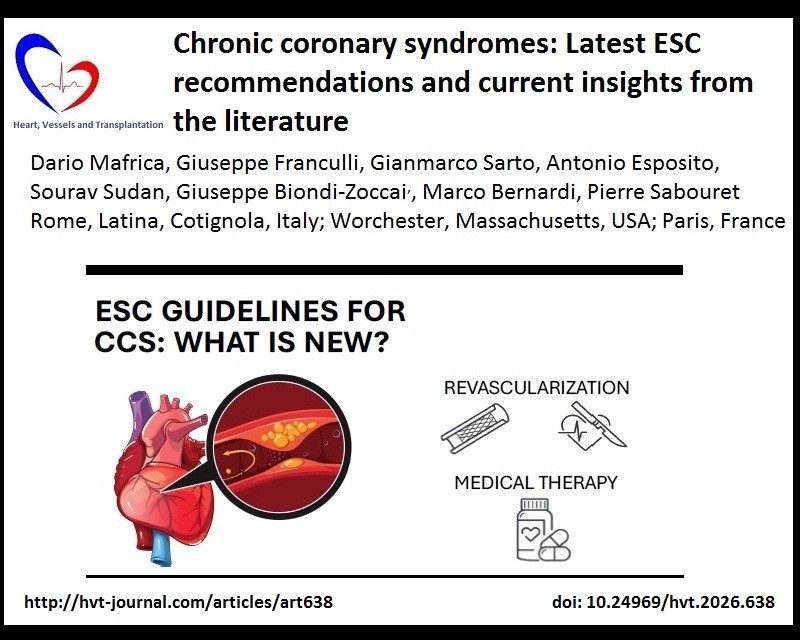
Graphical abstract
Introduction
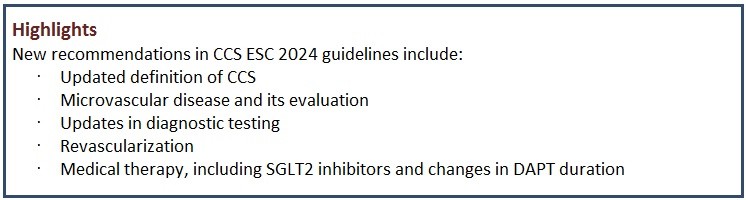
The European Society of Cardiology (ESC) 2024 guidelines on chronic coronary syndromes (CCS) has several updates regarding its definition and spectra of conditions included in the CCS, diagnosis, risk stratification, revascularization and medical therapy (Tables 1) .
The aim of our review is to discuss the main updates in the management of the CCS and their rationale, and to compare the differences in various aspects of between ESC 2019 and ESC 2024 guidelines. Moreover, we present a review of the current knowledge of the topic.
Diagnosis
In our previous paper , we discussed the lack of consensus between clinicians derived from ESC 2019 guidelines for CCS and the need for an update, especially in terms of risk stratification and patient-specific treatments.
The ESC 2024 guidelines are mostly similar to the ESC 2019 guidelines when it comes to management and diagnosis . The step 1 in both the guidelines remains the same i.e. ruling out other causes of the chest pain and making sure that it is not the case of ACS, this may involve doing a 12-lead electrocardiogram (ECG), blood workup and other tests. This is followed by doing a resting transthoracic echocardiography (echo) to rule out valvular problems and assess the cardiac function at baseline. After this, clinical likelihood of an obstructive coronary artery disease (CAD) is assessed, which is followed by a decision to whether to proceed with the diagnostic tests for CCS or to defer further testing.
|
Table 1. Key differences between 2019 and 2024 European Society of Cardiology guidelines on chronic coronary syndromes |
|||
|
Difference |
Reason |
Impact on Practice |
Example |
|
Revised definition of chronic coronary syndromes (CCS) |
Updated understanding of CCS pathophysiology and clinical presentations |
Expanded patient categorization allows for tailored diagnostic and therapeutic strategies |
A 65-year-old man with exertional angina but no obstructive coronary artery disease (CAD) |
|
Enhanced role of coronary computed tomography angiography (CCTA) |
Greater availability and validation of CCTA for anatomical diagnosis |
Increased use of non-invasive imaging reduces reliance on invasive coronary angiography |
A 50-year-old woman with atypical chest pain and intermediate pre-test probability of CAD |
|
Non-invasive testing for microvascular dysfunction |
Advances in microvascular angina diagnostics |
Improved detection and treatment of microvascular angina |
A 55-year-old woman with persistent angina and normal coronary angiography |
|
Emphasis on patient-reported outcome measures (PROMs) |
Recognition of the importance of patient-centered care |
Routine integration of PROMs ensures treatment aligns with patient priorities |
A 70-year-old patient prioritizing quality of life over aggressive revascularization options |
|
Expanded recommendations for lifestyle interventions |
Greater focus on behavioral strategies and digital health tools |
Integration of mobile health (mHealth) for behavior change and adherence |
A 45-year-old smoker benefiting from a structured mHealth smoking cessation program |
|
Use of sodium–glucose cotransporter 2 (SGLT2) inhibitors |
Evidence of cardiovascular benefits in patients with diabetes or heart failure |
Broader prescription of SGLT2 inhibitors beyond glucose control |
A 60-year-old diabetic with CCS and reduced left ventricular ejection fraction (LVEF) |
|
More explicit guidance on dual antiplatelet therapy (DAPT) |
New data on optimal DAPT duration and patient subgroups |
Reduced bleeding risks with tailored antiplatelet therapy regimens |
A 72-year-old man post-PCI with high bleeding risk |
|
Specific considerations for women and elderly patients |
Increased awareness of sex and age differences in CCS |
Tailored diagnostic and therapeutic approaches for these populations |
An 80-year-old woman with CCS and atrial fibrillation on anticoagulants |
The first step in the diagnosis of the CCS is taking a careful history and doing the physical exam, although chest pain/ discomfort is the most common presenting symptom, but both 2019 and 2024 guidelines reinforce that only 10-25% of the patients have the typical angina symptoms, rest have non classical symptoms and a small percentage would have dyspnea on exertion only as the presenting symptom .
ESC 2024 guidelines consider all the spectrum of symptoms such as chest pain triggered by emotional stress, dyspnea on exertion, pain in the arm, jaw or upper back as the potential angina equivalents and is included in class 2a recommendations .The ESC 2024 guidelines go a step further in this aspect, as per the guidelines terms like typical and atypical angina have limited prognostic value and the outcomes may be same, therefore focus should be more on taking a detailed history about the various aspects of the chest discomfort such as quality, location/size, duration, triggering and relieving factors . The ESC 2024 guidelines also focus on the careful history taking to consider the possible risk factors for the CCS such as tobacco smoking, history of premature cardiovascular disease in the family as these may help to estimate the pretest likelihood of obstructive CAD . Taking a detailed history of the pain characteristics and history of the risk factors has been included as a class 1 recommendation in the ESC 2024 guidelines . The focus on doing a thorough physical examination (exam) remains the same in both ESC 2019 guidelines and ESC 2024 guidelines.
After taking a careful history and doing the physical exam, the next step is to do the ECG and other biochemical tests, which mostly remains the same in the ESC 2019 guidelines and ESC 2024 guidelines.
Like 2019 guidelines, ESC 2024 guidelines recommend doing a standard 12-lead ECG particularly during or after the ischemic episode (Class 1 recommendation). However, ESC 2024 guidelines do not recommend doing ambulatory ECG in suspected CCS cases, as even the changes detected during the ambulatory ECG do not correlate with the actual stress testing. The utility of the ambulatory ECG is in detection of silent arrhythmias and in detection of vasospastic angina according to both the guidelines.
The utility of biochemical tests is mentioned both in the ESC 2019 and ESC 2024 guidelines and these include, lipid profile including low-density lipoprotein cholesterol (LDL-C), complete blood count (CBC), creatinine with estimated glomerular filtration rate (eGFR), thyroid function test, glycated hemoglobin (HbA1c) and fasting glucose. However, ESC 2024 guidelines also take into consideration the ultra-high sensitivity C-reactive protein (hs-CRP) and fibrinogen levels as they may carry a prognostic value and may even help in identifying the cases at high risk for acute cardiovascular events .
Both ESC 2019 and ESC 2024 guidelines recommend the use of echo as it may demonstrate some signs pointing towards the CCS; diastolic dysfunction is suggestive of microvascular dysfunction and can be particularly helpful in those patients who do not have obstructive macrovascular CAD. It also helps to rule out the structural causes that maybe causing the chest pain such as valvular abnormalities, pericarditis etc. . If echo is inconclusive, both the guidelines recommend cardiac magnetic resonance imaging (cMRI) (Class 2b recommendation). The rationale for using cMRI is the possibility to assess regional and global myocardial function, together with tissue characterization. cMRI can also be used to assess myocardium scarring or fibrosis, evaluating the presence and the entity of late gadolinium enhancement (LGE), the rationale being that the scarred myocardium retains the gadolinium contrast for a longer time. Chest X-Ray, although not used for the diagnosis of CCS is essential in ruling out the other causes of chest pain and pulmonary pathologies, however it has been moved to a class 2a recommendation in ESC 2024 guidelines compared to class 1 in ESC 2019 guidelines.
In ESC 2019 guidelines, the concept of clinical likelihood was introduced to narrow down the individuals at high risk for the CAD and in whom the diagnostic testing should be performed. The ESC 2024 guidelines also favor using the risk factor -weighted clinical model to screen the patient population and eventually classify them into various subgroups having very low, low or intermediate probability of the obstructive CAD, thereby making it as a favorable tool for screening population and subjecting them to further diagnostic testing compared to the contemporary pre-test probability models . However, there are few more points mentioned in the ESC 2024 guidelines regarding this. For patients with severe risk factors (e.g., familial hypercholesterolemia, severe kidney dysfunction, rheumatic/inflammatory diseases, peripheral artery disease), individual adjustment of CAD likelihood may be necessary as these are not reflected in the risk factor-weighted clinical likelihood model (RF-CL model) (class 1).
There is a discussion in ESC 2024 guidelines about including exercise ECG and coronary computed tomography angiography (CCTA) in assessing patients before subjecting them to diagnostic testing for CAD. A negative exercise ECG can reclassify patients into the very low (≤5%) clinical likelihood group. However, CCTA provides more accurate information and is associated with fewer angina symptoms and adverse events compared to exercise ECG. CCTA provides a diagnostic superiority over the exercise ECG in diagnosing the plaques’ burden/stenosis in coronary arteries, hence, it allows to diagnose CAD in advance, leading to appropriate medical therapy, eventually avoiding coronary angiography. This allows to improve the anginal symptoms which might develop in future. On the other end, exercise ECG does not provide anatomical features, consequently, clinicians tend not to give medical therapy based on its results and direct the patients towards coronary angiography or CCTA. This is the reason why 2024 ESC guidelines for CCS declassed the indications for exercise ECG, giving it a mainly prognostic (and not diagnostic) value.
Exercise ECG is still useful for reproducing anginal symptoms, which have prognostic value . Coronary artery calcification (CAC) can also be considered which is measured using ECG-gated non-contrast-enhanced computed tomography (CT) scan. As per the ESC 2024 guidelines, further testing can be deferred in the patients with no coronary artery calcification.
Risk stratification
Risk stratification models have been used in the past guidelines as well as in the current to determine the Clinical likelihood of obstructive CAD. Older guidelines in particular used RF-CL (Risk Factors-Clinical likelihood model), which considers the traditional risk factors such as age, sex, hypertension, diabetes, smoking etc to estimate the clinical likelihood of obstructive CAD.
However, there were certain limitations, such as underestimating in certain populations and not being able to predict certain subclinical forms of atherosclerosis.
ESC 2024 guidelines introduce the coronary artery calcium score–weighted clinical likelihood (CACS-CL) model that combines the CACS with the RF-CL model to better categorize patients’ risk levels. This is refereed especially for those patients who have low or very low likelihood of CAD to restratify them, taking advantage of the high negative predictive value of CCTA. Indeed, 54% of individuals were categorized as having a very low likelihood of obstructive CAD using the CACS-CL model, compared to 38% with the RF-CL model alone, whereas the CACS-CL model was superior in predicting myocardial infarction (MI), and death during follow-up .
Finally based on these models, we subdivide the patient population into several subgroups. The very low likelihood (≤5%) group did not require further testing unless symptoms persist and non-cardiac causes are ruled out. The low likelihood (>5%–15%) group was characterized by testing depending if symptoms are limiting and need clarification. The moderate (15%–50%), high (50%–85%), very high (>85%) likelihood groups require further diagnostic testing.
ESC 2024 guidelines do not recommend exercise ECG in general population to diagnose for CCS because of its low sensitivity and specificity. As already mentioned, it is useful only for risk stratification and to determine the likelihood .
Based on the CACS-CL likelihood model and depending upon the likelihood, the various diagnostic modalities are added. In cases with very low likelihood (<5%), further testing is deferred. In the cases with low likelihood (5-15%) based on CACS-CL, CCTA can be done. CCTA is recommended for patients with moderate to high likelihood of obstructive CAD (15%-50%), particularly in cases where CAD is suspected but prevalence is low. CCTA has a high negative predictive value and can rule out obstructive CAD, while also identifying non-obstructive CAD to guide preventive measures.
Functional imaging involves the use of stress echocardiography, cMRI, positron-emission tomography (PET), and single-photon emission computed tomography (SPECT), and these can be used in the case of high likelihood or in the situations where the CCTA is inconclusive or where the information on myocardial ischemia, viability or microvascular disease is required. They have a particular utility in the diagnosis of angina with non-obstructive coronary arteries/ ischemia with non-obstructive coronary arteries (ANOCA/INOCA). Finally, for patients with high (≥85%) clinical likelihood, invasive testing can be considered directly, especially if symptoms are not responsive to medical therapy or suggest high event risk.
Microvascular disease and coronary physiology
In the latest guidelines for CCS, it is underlined the role of the full physiology in the diagnostic work up of angina or ischemia with no obstructive coronary disease. Mostly, it is crucial to distinguish an involvement of the microvascular reserve from an epicardial spasm. ANOCA/INOCA is increasingly recognized, but still underestimated problem with many potential etiologies . Because of a general lack of diagnostic tools, patients with ANOCA/INOCA have been untreated (Table 2). The CorMicA trial demonstrated that an accurate diagnosis of the underlying etiology of the angina (microvascular vs. vasospastic) with invasive coronary functional angiography (CFA), followed by specific treatments, led to improvements in clinical outcomes . Different technical advances have been made to better quantify the microvascular resistances. The method is based on continuous thermodilution, measuring volumetric flow (in mL/min) and absolute microvascular resistance (in wood units) in a both safe and operator-independent manner .
Another theoretical progress that has been made in this scope is based on the idea that microvascular resistance at rest rarely corresponds to the effective resting resistance, hence, the concept of microvascular reserve has been proposed as a specific index for the microcirculation . At this rate, not only it is desirable, but it is almost mandatory, when feasible, to perform a complete CFA in the catheterization (cath) laboratory. The main diagnostic tools that can be used in the cath lab for ANOCA/INOCA diagnostic work up are microcirculatory resistance (IMR), coronary flow reserve (CFR) and invasive vasoreactivity testing using acetylcholine (or ergonovine) .
The principal pressure parameters are istantaneous wave-free ratio (iFR) and fractional flow reserve (FFR). These two techniques are different because iFR assesses the pressure drop in a rest scenario, while FFR simulates a hyperemia condition. The DEFINE-FLAIR and DEFINESWEDEHEART studies have compared the 5-year outcome of patients managed with iFR and FFR, and they have reported a 2% absolute increase in all-cause mortality in those managed with iFR (14, 15).
|
Table 2. Key unmet needs emerging from attentive perusal of 2019 and 2024 European Society of Cardiology guidelines on chronic coronary syndromes |
|||
|
Unmet Need |
Explanation |
Clinical Patient Example |
Potential Remedial Action/Plan |
|
Standardization of diagnostic criteria for ANOCA/INOCA |
Guidelines note ANOCA/INOCA prevalence but lack detailed diagnostic criteria. |
A 58-year-old woman has chest pain; angiography shows no blockages. Symptoms persist without a clear diagnosis. |
Create standardized diagnostic protocols for ANOCA/INOCA, including specific criteria and testing procedures. |
|
Comprehensive risk assessment tools |
New models estimate obstructive coronary artery disease likelihood but need to integrate more risk factors. |
A 65-year-old man with hypertension, diabetes, and family heart disease history presents with atypical chest pain; current risk models conflict. |
Develop risk assessment tools incorporating genetic markers, lifestyle, and emerging biomarkers for accurate evaluations. |
|
Personalization of treatment strategies |
Guidelines offer general recommendations but lack detailed personalized treatment guidance. |
A 70-year-old with chronic kidney disease and CCS needs a treatment plan considering both conditions; current guidelines provide limited direction. |
Create personalized treatment algorithms considering genetics, comorbidities, and patient preferences to optimize therapy. |
|
Long-term outcome data for novel therapies |
Limited long-term data on new therapies hinders assessment of sustained efficacy and safety. |
A 60-year-old patient prescribed a new anti-anginal medication is concerned about long-term benefits and risks due to limited data. |
Conduct long-term studies to gather efficacy and safety data on new therapies, providing evidence-based guidance. |
|
Integration of patient-reported outcomes |
Guidelines acknowledge patient involvement but lack methodologies for integrating patient-reported outcomes. |
A 55-year-old patient is concerned about treatment impact on quality of life; the clinical team lacks a structured approach to incorporate patient feedback. |
Implement tools to systematically collect and incorporate patient-reported outcomes into clinical decision-making. |
|
Management of multimorbidity |
Guidance on managing patients with multiple chronic conditions alongside CCS is limited. |
A 68-year-old with CCS, diabetes, and COPD requires coordinated care; current guidelines offer limited advice on managing such cases. |
Develop comprehensive management strategies and multidisciplinary care pathways for patients with multiple chronic conditions. |
This was not associated with any unplanned revascularization or non-fatal MI rate increase.
Although it was initially hypothesized that this mortality excess could be related to a higher proportion of ‘inappropriate’ revascularization deferral with iFR compared with FFR (50% vs. 45%), , but it is reassuring that iFR-based deferral is as safe as FFR-based deferral up to 5 years . Moreover, in the frequent scenario of a patient with multivessel CAD, recent studies such as RIPCORD2 and FUTURE did not demonstrate any improvement in clinical outcomes comparing FFR measurement of all epicardial vessels with angiography alone (17, 18). Therefore, intracoronary pressure measurement in patients with multivessel CAD should only be performed on intermediate lesions.
The recently introduced continuous thermodilution technique for measuring absolute coronary flow represents an alternative method for the evaluation of CFR. This method also allows the evaluation of the microvascular resistance reserve, a novel index for assessing coronary microvascular function (19, 20).
Adenosine is administered, after nitrates, to assess endothelium-independent vasodilation. CFR can be calculated using bolus or continuous thermodilution, or Doppler flow velocity (21, 22).
Index of microvascular resistance (IMR) is calculated as the product of distal coronary pressure at maximal hyperemia multiplied by the hyperemic mean transit time. Increased IMR (≥25 U) indicates microvascular dysfunction (23, 24). Continuous thermodilution-derived measurements have shown higher reproducibility and lower operator-dependence than similar measurements derived from bolus thermodilution.
Revascularization
The main topics that have been discussed in 2024 ESC guidelines for CCS about revascularization [surgical via coronary artery bypass (CABG) or percutaneous via percutaneous coronary intervention (PCI)] are regarding the role of routine early revascularization compared with optimal medical therapy alone, the modality of revascularization, and the role of ischemia-testing for decision-making.
The discussion started since the evidence emerged from the ISCHEMIA trial . This study compared the invasive vs. conservative approach in patients with stable CAD. The primary outcome was the composite of death from cardiovascular causes, MI, or hospitalization for unstable angina, heart failure, or resuscitated cardiac arrest. The key secondary outcomes were the composite of death from cardiovascular causes or MI and angina-related quality of life.
The study excluded those patients with severely reduced ejection fraction (EF), left main disease or complex CAD. This trial showed the non-superiority of initial invasive strategy over medical therapy in both primary and secondary outcomes. The ISCHEMIA trial was published about a year after the publication of the ESC 2019 guidelines, in which revascularization was supported on top of medical therapy. Anyway, most of the evidence was based on studies that compared the benefits of CABG over PCI, but none of them compared the benefits of medical therapy alone. While the consensus for myocardial revascularization in patients with severely depressed EF (<35%) is still strong, it is not the same for those patients who do not show left ventricular (LV) systolic dysfunction. Indeed, patients with <35% EF have been excluded from the ISCHEMIA trial.
For those patients who showed evidence of CAD, in absence of severely depressed EF and/or angina-related symptoms, the previous guidelines for myocardial revascularization suggested the functional evaluation of the stenoses, in terms of iFR/FFR, diameter of the stenoses and extension of the ischemic area.
The latest evidence determined a new indication for myocardial revascularization in 2024 ESC guidelines for CCS. In fact, the main aspects that are involved in the decision-making for myocardial revascularization are the persistence of angina-related symptoms on top of guideline-directed medical therapy. This does not apply in those patients with three-vessel CAD or functionally significant left main stenosis, in whom revascularization is still recommended in addition to guideline-directed medical therapy (class I level of evidence A).
Consequently, we can affirm that the latest guidelines cores the decision-making for revascularization on the patient’s symptoms, and not on the functional features of the stenoses, except for complex coronary anatomies at high risk such as three-vessel CAD or left anterior descending artery disease. Moreover, 2024 ESC guidelines stress the concept of revascularization “on top” of optimized medical therapy, considering it as a part of the therapy, and not the definitive solution. In fact, atherosclerosis is a progressive and systemic disease, which needs a long-term medical therapy to prevent its progression and complications.
Patients with severely depressed EF
The management of CAD in patients with severely depressed EF (<35%) is mainly oriented towards revascularization. In fact, for those patients who show severe systolic dysfunction, revascularization is recommended (class IC). The rationale of revascularization is based on impeding the worsening of LV systolic dysfunction because of ischemia, and improving myocardial function, recruiting those areas in which blood supply is impaired. This aspect introduced the concepts of stunned and hibernated myocardium.
When myocardium is exposed to chronic ischemia, if there are no “acute” events in the meanwhile, the heart reduces its metabolic demand . This concept has been defined though years as “smart heart”. This happens because the main metabolic pathways that are used by the myocardium are O2-dependent (such as fatty acid metabolism). In absence of O2, the myocardium uses different metabolic pathways, such as the ketogenic amino acids or the anaerobic glycolysis, which are less efficient in terms of energy delivery and reactive oxygen species production. This last one aspect may contribute to myocardial dysfunction .
On the other end, stunned myocardium is defined as a viable myocardium after revascularization, but does not show signs of improved function.
The reason of the stunning is the downregulation of those metabolic pathways mentioned above. This dysfunction is reversible in a couple of weeks, and medical therapies, especially beta-blockers (β1-selective), seem to improve this metabolic aspect .
The 2024 ESC guidelines for CCS spend some words about the importance of evaluation of myocardial viability through functional tests. This aspect is crucial because revascularization in irreversibly damaged and not functionally active areas may be ineffective, and in some cases, harmful.
The main tests we can use for the evaluation of myocardial viability are PET/SPECT, stress-echo, and cMRI. PET/SPECT allows to characterize myocardial viability in terms of metabolism, giving an anatomical and functional correlation.
Stress-echo allows detecting those areas of myocardium, which show viability when stimulated with an inotrope stimulus, which may benefit from revascularization. cMRI is the best test for tissue characterization, evaluation of scar extent and stratification of the arrhythmic risk . The latest guidelines for CCS from ESC do not clearly take a stand for the evaluation of myocardial viability. It is underlined the importance of this assessment with the test mentioned before, but there is a lack of evidence now. On the other end, it is important to correlate the functional aspect (in terms of LVEF, contractile reserve, metabolism, scar extent) with the arrhythmic risk and the prevention of further cardiovascular acute events.
Medical therapy
For the medical therapy of CCS, the updated guidelines reported a notable advancement by presenting a new and organized method rooted in the diamond model, initially suggested by specialists in the area. This approach highlights highly tailored treatment that considers the patient's clinical features, medication sensitivity, and the pathophysiological factors contributing to angina. Numerous elements, including the local accessibility of medications and their costs, are also considered in this intricate decision-making process. This method relies on the evaluation of clinical factors, including the occurrence of arrhythmias, comorbid conditions such as heart failure or chronic obstructive pulmonary disease, possible drug interactions, patient’s choices, and hemodynamic measurements like blood pressure and heart rate. This model relies on the principle that various mechanisms can independently or collectively cause anginal symptoms and myocardial ischemia. These are represented by epicardial coronary artery narrowing, vasospasm, and endothelial impairment affecting both the major coronary arteries and the microcirculation. The choice of antianginal drugs is based on the mainly underlying mechanism. All these drugs may be used alone or together to treat obstructive, vasospastic, or microvascular angina pectoris. For example, calcium channel blockers and nitrates are highly effective in treating vasospasm-induced angina.
The diamond model is applied systematically and in a stepwise manner, beginning with first-line medications like beta-blockers and calcium channel blockers, advancing to second-line options such as long-acting nitrates, ranolazine, and ivabradine in case of poor response to medical therapy.
Nevertheless, 2024 ESC guidelines for CCS emphasize a significant concern: the absence of direct comparisons between various pharmacological therapies, particularly the traditional ones like beta-blockers and calcium-channel blockers. This absence of data also pertains to compare established therapies with newer drugs, such as ranolazine and ivabradine.
Another key aspect to highlight is that most of antianginal medications do not demonstrate substantial improvements in terms of outcomes, apart from beta-blockers, which demonstrated significant effectiveness when given during the initial year following an acute MI.
These aspects highlight the need to make therapeutic decisions based not just on symptom management, but also evaluating existing evidence and actively encouraging further research to fill current knowledge voids. In addition to medical therapy to control myocardial ischemia and associated symptoms, it is critical to provide comprehensive 360-degree patient care. This involves emphasizing cardiovascular event prevention through careful risk factor modification and cardioprotective therapy. The 2024 ESC guidelines for the management of CCS introduce substantial advancements in medical therapy compared to the 2019 edition, reflecting the evolving understanding of pathophysiology and treatment strategies in ischemic heart disease.
Patient education, lifestyle optimization for risk-factor control, exercise therapy
The 2024 guidelines emphasize a holistic and personalized approach for the management of CCS, focusing on patient education, lifestyle interventions, risk factor control optimization, and exercise therapy. Indeed, this aspect has been included in the chapter on “Guideline-Directed Therapy”.
Patient education is strongly recommended (Class I, Level C) as a critical tool to improve knowledge, self-management, and empowerment, fostering long-term adherence to treatment. Multidisciplinary behavioral approaches to support patients in achieving healthy lifestyles are also recommended (Class I, Level A). Regarding physical activity, moderate-intensity aerobic exercise (150–300 minutes per week) or vigorous-intensity exercise (75–150 minutes per week), along with reduced sedentary time, is recommended (Class I, Level B). Exercise-based cardiac rehabilitation programs are endorsed (Class I, Level A) to enhance cardiovascular risk profiles and reduce mortality. Finally, interventions such as home-based cardiac rehabilitation and mobile health solutions should be considered to improve long-term adherence to healthy behaviors (Class IIa, Level B). This patient-centered and multidisciplinary strategy is essential for reducing disease progression and achieving better clinical outcomes.
Antithrombotic therapy
The 2024 ESC guidelines for CCS introduce several notable advancements for antithrombotic therapy, reflecting a shift toward a more personalized approach. For patients undergoing PCI, the standard approach remains six months of dual antiplatelet therapy (DAPT) with aspirin and clopidogrel (Class I, Level A). However, for patients with low ischemic risk but high bleeding risk, the guidelines recommend discontinuing DAPT after 1–3 months and transitioning to single antiplatelet therapy (SAPT) (Class I, Level A) This recommendation highlights the focus on balancing ischemic protection and bleeding risk (30, 31).
A major change involves the inclusion of clopidogrel monotherapy, 75 mg daily, as an equally effective alternative to aspirin monotherapy (75–100 mg daily) for long-term management of CCS patients who have experienced a prior MI or PCI (Class I, Level A) (32- 34). This represents a significant change from the previous guidelines, which limited clopidogrel to patients with aspirin intolerance or in specific conditions, such as peripheral arterial disease or prior stroke.
Aspirin monotherapy continues to be the standard treatment for patients with a history of CABG (Class I, Level A). Additionally, it has received a new recommendation for patients without prior MI or revascularization but with significant obstructive CAD (Class I, Level B).
Another update pertains to the duration of DAPT following PCI in patients with neither high bleeding nor high ischemic risk. The 2024 ESC guidelines recommend that short DAPT may be considered (1–3 months) followed by SAPT in this group of patients (Class IIb, Level B). Notably, SAPT with P2Y12 inhibitors (e.g., ticagrelor or clopidogrel) is increasingly recognized as a viable option for high-risk ischemic patients after the DAPT phase, providing effective ischemic protection while minimizing bleeding risks (32, 35-38).
Lipid-lowering drugs
The most relevant update regarding lipid-lowering drugs in the 2024 ESC guidelines for CCS concerns bempedoic acid. Bempedoic acid administration has received a Class I, Level B recommendation for patients who are statin-intolerant and fail to achieve their LDL-C goals with ezetimibe alone .
In terms of tolerance, the benefit of bempedoic acid is determined by its mechanism of action, which inhibits cholesterol formation at a different level of the enzymatic chain.
This results in a higher specificity for liver enzymes instead of the skeletal muscles ones, with the result of an improved tolerance in terms of myopathy. Furthermore, it is recommended as a Class IIa, Level C option for individuals who do not meet LDL-C targets despite being on the maximum tolerated doses of statins and ezetimibe.
ESC guidelines on CCS further reinforce the indication for prompt and intensive hypolipidemic therapy to reduce cardiovascular risk in moderate, high, or very high-risk patients. The specific targets are less than 55 mg/dL in high-risk patients and less than 40 mg/dL in very high-risk patients, which are the same as 2019 ESC guidelines for CCS. For those patients who fail to achieve target levels with statin monotherapy, the addition of ezetimibe or proprotein convertase subtilisin/kexin type 9 (PCSK9) inhibitors, such as alirocumab and evolocumab, is recommended. One of the newest options is inclisiran, an RNA interference (RNAi) agent that provides sustained LDL-C reduction with biannual administration, help to alleviate patient burden and improve adherence, with its adjunct potential of long-term plaque stabilization (40, 41).
Sodium–glucose co-transporter 2 (SGLT2) inhibitors and glucagon-like peptide-1 (GLP-1) receptor agonists
According to numerous recently published studies, SGLT-2 inhibitors and GLP-1 receptor agonists have emerged as key therapeutic agents in patients with atherosclerotic cardiovascular disease (ASCVD), including CCS and type II diabetes (T2DM) due to their demonstrated ability to improve cardiovascular outcomes in this population (42- 46).
These updates include a recommendation (Class I, Level A) for SGLT2 inhibitors and GLP-1 receptor agonists in patients with T2DM and CCS to lower the incidence of cardiovascular events, regardless of baseline or target HbA1c levels or concurrent glucose-lowering therapies). In addition to this, based on the results of the SELECT trial , which demonstrated the protective role of semaglutide in reducing cardiovascular mortality, MI and stroke in overweight or obese patients without diabetes, semaglutide has also been indicated for use in non-diabetic patients with BMI> 27kg/m2 (Class IIa, Level B).
Anti-inflammatory drugs
Anti-inflammatory therapy has emerged as an area of increasing interest in the management of CCS. Chronic inflammation is an important contributor to the development of atherosclerotic disease. Recent research indicates that low-dose colchicine may reduce the risk of major cardiovascular events such as MI and stroke — particularly in patients with high residual inflammation. The COLCOT and LODOCO2 trials demonstrated reductions in MACE in post-MI and stable CCS populations (48, 49). A meta-analysis further confirmed colchicine's efficacy in reducing MI, stroke, and revascularization rates in CCS patients .
As a result, the 2024 ESC guidelines recommend that in CCS patients with atherosclerotic CAD, low-dose colchicine (0.5 mg daily) should be considered to reduce MI stroke, and the need for revascularization (Class IIa, Level A), establishing its role as an adjunctive therapy in atherothrombotic CAD management.
Conclusions
The latest ESC guidelines for CCS gave an important update for the treatment of different categories of patients, overtaking the classification of the six phenotypes that has been previously proposed, which, however, did not have a corresponding in terms of different management for diagnosis and therapy. Instead, it is underlined the importance of considering CCS as a “spectrum”, in which it is important to treat comorbidities that contribute to the perpetuation of its underlying mechanism, which is atherosclerosis. In fact, the latest evidence allowed to introduce in CCS guidelines therapies such as GLP-1 agonists and SGLT2i.
Another crucial aspect that has been proposed is represented by the definition of ANOCA/INOCA as a part of the spectrum of CCS. We hope that the next advances in evidence will allow to recognize even more specific therapies for specific phenotypes of patients.
Peer-review: External and Internal
Conflict of interest: Giuseppe Biondi-Zoccai has consulted for Abiomed, Aleph, Amarin, Balmed, Cardionovum, Crannmedical, Endocore Lab, Eukon, Guidotti, Innovheart, Meditrial, Menarini, Microport, Opsens Medical, Terumo, and Translumina, outside the present work. All other authors report no conflict of interest.
Authorship: D.M., G.F., G.S., A.E., S.S., G.B.-Z., M.B., and P.S. equally contributed to the preparation of manuscript, it revision and approved it for publication, thus fulfilled all authorship criteria.
Acknowledgements and funding: None to declare
Statement on A.I.-assisted technologies use: Authors used AI-assisted technology in preparation of graphical abstract
Data and material availability: Does not apply
References
| 1. Vrints C, Andreotti F, Koskinas KC, Rossello X, Adamo M, Ainslie J, et al. and ESC Scientific Document Group. 2024 ESC Guidelines for the management of chronic coronary syndromes. Eur Heart J 2024; doi: 10.1093/eurheartj/ehae177 https://doi.org/10.1093/eurheartj/ehae177 PMid:39210710 |
||||
| 2. Mafrica D, Franculli G, Sabouret, P, Sarto G, Biondi-Zoccai G, Bernardi M, Esposito A. . Chronic coronary syndromes: diagnosis, management and gaps in evidence. Heart Vessels Transplant 2024; doi: 10.24969/hvt.2024.508 https://doi.org/10.24969/hvt.2024.508 |
||||
| 3. Douglas PS, Nanna MG, Kelsey MD, Yow E, Mark DB, Patel MR, et al. for the PRECISE Investigators. Comparison of an initial risk-based testing strategy vs usual testing in stable symptomatic patients with suspected coronary artery disease: The PRECISE randomized clinical trial. JAMA Cardiol 2023; 8: 904-14. doi: 10.1001/jamacardio.2023.2595 https://doi.org/10.1001/jamacardio.2023.2595 PMid:37610731 PMCid:PMC10448364 |
||||
| 4. Jia RF, Li L, Li H, Cao XJ, Ruan Y, Meng S, et al. Meta-analysis of C-reactive protein and risk of angina pectoris. Am J Cardiol 2020; 125: 1039-45. doi:10.1016/j.amjcard.2020.01.005 https://doi.org/10.1016/j.amjcard.2020.01.005 PMid:32014245 |
||||
| 5. Steeds RP, Garbi M, Cardim N, Kasprzak JD, Sade E, Nihoyannopoulos P, et al., 2014-2016 EACVI Scientific Documents Committee, & 2014-2016 EACVI Scientific Documents Committee. EACVI appropriateness criteria for the use of transthoracic echocardiography in adults: a report of literature and current practice review. European heart journal. Cardiovascular Imaging 2017; 18: 1191-204. doi:10.1093/ehjci/jew333 https://doi.org/10.1093/ehjci/jew333 PMid:28329307 |
||||
| 6. Winther S, Schmidt SE, Rasmussen LD, Juárez Orozco LE, Steffensen FH, Bøtker HE, et al. Validation of the European Society of Cardiology pre-test probability model for obstructive coronary artery disease. Eur Heart J 2021; 42: 1401-11. doi:10.1093/eurheartj/ehaa755 https://doi.org/10.1093/eurheartj/ehaa755 PMid:33180904 |
||||
| 7. Rasmussen LD, Schmidt SE, Knuuti J, Newby DE, Singh T, Nieman K, et al. Exercise electrocardiography for pre-test assessment of the likelihood of coronary artery disease. Heart 2024; 110: 263-70. doi:1136/heartjnl-2023-322970. https://doi.org/10.1136/heartjnl-2023-322970 PMid:37607813 |
||||
| 8. Winther S, Schmidt SE, Foldyna B, Mayrhofer T, Rasmussen LD, Dahl JN, et al. Coronary calcium scoring improves risk prediction in patients with suspected obstructive coronary artery disease. J Am Coll Cardiol 2022; 80: 1965-77. doi:10.1016/j.jacc.2022.08.805 https://doi.org/10.1016/j.jacc.2022.08.805 PMid:36396197 PMCid:PMC10466200 |
||||
| 9. Knuuti J, Ballo H, Juarez-Orozco LE, Saraste A, Kolh P, Rutjes AWS, et al. The performance of non-invasive tests to rule-in and rule-out significant coronary artery stenosis in patients with stable angina: a meta-analysis focused on post-test disease probability. Eur Heart J 2018; 39: 3322-30. doi:10.1093/eurheartj/ehy267 https://doi.org/10.1093/eurheartj/ehy267 PMid:29850808 |
||||
| 10. Kunadian V, Chieffo A, Camici PG, Berry C, Escaned JHEM, Maas A, et al. An EAPCI expert consensus document on ischaemia with non-obstructive coronary arteries in collaboration with European Society of Cardiology Working Group on Coronary Pathophysiology & Microcirculation Endorsed by Coronary Vasomotor Disorders International Study Group. Eur. Heart J 2020; 41: 3504-520. doi:10.4244/EIJY20M07_01. https://doi.org/10.4244/EIJY20M07_01 PMid:32624456 PMCid:PMC9707543 |
||||
| 11. Bairey Merz CN, Pepine CJ, Walsh MN, Fleg JL. Ischemia and no obstructive coronary artery disease (INOCA): developing evidence-based therapies and research agenda for the next decade. Circulation 2017; 135: 1075-92. doi: doi:10.1161/CIRCULATIONAHA.116.024534 https://doi.org/10.1161/CIRCULATIONAHA.116.024534 PMid:28289007 PMCid:PMC5385930 |
||||
| 12. Xaplanteris P, Fournier S, Keulards DCJ, Adjedj J, Ciccarelli G, Milkas Aet al. Catheter-based measurements of absolute coronary blood flow and microvascular resistance: Feasibility, safety, and reproducibility in humans. Circ Cardiovasc Interv 2018; 11: e006194 doi: doi:10.1161/CIRCINTERVENTIONS.117.006194 https://doi.org/10.1161/CIRCINTERVENTIONS.117.006194 PMid:29870386 |
||||
| 13. De Bruyne B, Pijls NHJ, Gallinoro E, Candreva A, Fournier S, Keulards DCJ, et al. Microvascular resistance reserve for assessment of coronary microvascular function: JACC Technology Corner. J Am Coll Cardiol 2021; 78: 1541-9. doi: doi:10.1016/j.jacc.2021.08.017 https://doi.org/10.1016/j.jacc.2021.08.017 PMid:34620412 |
||||
| 14. Eftekhari A, Holck EN, Westra J, Olsen NT, Bruun NH, Jensen LO, et al. Instantaneous wave free ratio vs. fractional flow reserve and 5-year mortality: iFR SWEDEHEART and DEFINE FLAIR. Eur Heart J 2023; 44: 4376-84. doi:10.1093/eurheartj/ ehad582 https://doi.org/10.1093/eurheartj/ehad582 PMid:37634144 |
||||
| 15. Berry C, McClure JD, Oldroyd KG. Coronary revascularization guided by instantaneous wave-free ratio compared to fractional flow reserve: pooled 5-year mortality in the DEFINE-FLAIR and iFR-SWEDEHEART trials. Eur Heart J 2023; 44: 4388-90. doi:10.1093/eurheartj/ehad552 https://doi.org/10.1093/eurheartj/ehad552 PMid:37634165 PMCid:PMC10627273 |
||||
| 16. Berntorp K, Rylance R, Yndigegn T, Koul S, Fröbert O, Christiansen EH, et al. Clinical outcome of revascularization deferral with instantaneous wave-free ratio and fractional flow reserve: a 5-year follow-up substudy from the iFR-SWEDEHEART Trial. J Am Heart Assoc 2023; 12: e028423. doi:10.1161/jaha.122.028423 https://doi.org/10.1161/JAHA.122.028423 PMid:36734349 PMCid:PMC9973641 |
||||
| 17. Rioufol G, Derimay F, Roubille F, Perret T, Motreff P, Angoulvant D, et al. Fractional flow reserve to guide treatment of patients with multivessel coronary artery disease. J Am Coll Cardiol 2021; 78: 1875-85. doi:10.1016/j.jacc.2021.08.061 18. Stables RH, Mullen LJ, Elguindy M, Nicholas Z, Aboul-Enien YH, Kemp I, et al. Routine pressure wire assessment versus conventional angiography in the management of patients with coronary artery disease: the RIPCORD 2 trial. Circulation 2022; 146: 687-98. doi:10.1161/circulationaha.121.057793 https://doi.org/10.1161/CIRCULATIONAHA.121.057793 PMid:35946404 |
||||
| 19. De Bruyne B, Belmonte M, Jabbour JR, Curzen N. Invasive functional testing in the cath lab as a routine investigation in INOCA: pros and cons. EuroIntervention 2023; 19: 23-5. doi:10.4244/EIJ-E-23-00008 https://doi.org/10.4244/EIJ-E-23-00008 PMid:37170563 PMCid:PMC10173751 |
||||
| 20. de Vos A, Jansen TPJ, van 't Veer M, Dimitriu-Leen A, Konst RE, Elias-Smale S, et al. Microvascular resistance reserve to assess microvascular dysfunction in ANOCA patients. JACC Cardiovasc Interv 2023; 16: 470-81. doi:10.1016/j.jcin.2022.12. 012 https://doi.org/10.1016/j.jcin.2022.12.012 PMid:36858668 |
||||
| 21. Pijls NH, De Bruyne B, Smith L, Aarnoudse W, Barbato E, Bartunek J, et al. Coronary thermodilution to assess flow reserve: validation in humans. Circulation 2002; 105: 2482-6. doi:10.1161/01.cir.0000017199.09457.3d https://doi.org/10.1161/01.CIR.0000017199.09457.3D PMid:12034653 |
||||
| 22. Barbato E, Aarnoudse W, Aengevaeren WR, Werner G, Klauss V, Bojara W, et al. Validation of coronary flow reserve measurements by thermodilution in clinical practice. Eur Heart J 2004; 25: 219-23. doi:10.1016/j.ehj.2003.11.009 https://doi.org/10.1016/j.ehj.2003.11.009 PMid:14972422 |
||||
| 23. Fearon WF, Balsam LB, Farouque HM, Robbins RC, Fitzgerald PJ, Yock PG, et al. Novel index for invasively assessing the coronary microcirculation. Circulation 2003; 107: 3129-32. doi:10.1161/01.Cir.0000080700.98607.D1 https://doi.org/10.1161/01.CIR.0000080700.98607.D1 PMid:12821539 |
||||
| 24. Fearon WF, Kobayashi Y. Invasive assessment of the coronary microvasculature: the index of microcirculatory resistance. Circ Cardiovasc Interv 2017; 10: e005361. doi: 10.1161/circinterventions.117.005361 https://doi.org/10.1161/CIRCINTERVENTIONS.117.005361 PMid:29222132 PMCid:PMC9109915 |
||||
| 25. Maron DJ, Hochman JS, Reynolds HR, Bangalore S, O'Brien SM, Boden WE, et al; ISCHEMIA Research Group. Initial invasive or conservative strategy for stable coronary disease. N Engl J Med 2020; 382: 1395-407. doi: doi:10.1056/NEJMoa1915922 https://doi.org/10.1056/NEJMoa1915922 PMid:32227755 PMCid:PMC7263833 |
||||
| 26. Vaidya Y, Cavanaugh SM, Dhamoon AS. Myocardial Stunning and Hibernation. (Updated 2023 Aug 8). In: StatPearls (Internet). Treasure Island (FL): StatPearls Publishing; 2025 Jan-. Available from: URL: https://www.ncbi.nlm.nih.gov/books/NBK537026/. | ||||
| 27. Vanni D, Viceconte N, Petrella G, Biccirè FG, Pelliccia F, Tanzilli Get al. A pilot study on the 1H-NMR serum metabolic profile of Takotsubo patients reveals systemic response to oxidative stress. Antioxidants (Basel) 2021 https://doi.org/10.3390/antiox10121982 PMid:34943085 PMCid:PMC8750825 |
||||
| 10: 1982. doi: doi:10.3390/antiox10121982 https://doi.org/10.3390/antiox10121982 PMid:34943085 PMCid:PMC8750825 |
||||
| 28. Le DE, Alkayed NJ, Cao Z, Chattergoon NN, Garcia-Jaramillo M, Thornburg K, et al. Metabolomics of repetitive myocardial stunning in chronic multivessel coronary artery stenosis: Effect of non-selective and selective β1-receptor blockers. J Physiol 2024; 602: 3423-48. doi:10.1113/JP285720. https://doi.org/10.1113/JP285720 PMid:38885335 PMCid:PMC11284965 |
||||
| 29. Perone F, Bernardi M, Redheuil A, Mafrica D, Conte E, Spadafora L, et al. Role of cardiovascular imaging in risk assessment: Recent advances, gaps in evidence, and future directions. J Clin Med 2023; 12: 5563. doi:10.3390/jcm12175563 https://doi.org/10.3390/jcm12175563 PMid:37685628 PMCid:PMC10487991 |
||||
| 30. Valgimigli M, Frigoli E, Heg D, Tijssen J, Jüni P, Vranckx P, et al; MASTER DAPT Investigators. Dual antiplatelet therapy after PCI in patients at high bleeding risk. N Engl J Med 2021; 385: 1643-55. doi: doi:10.1056/NEJMoa2108749 https://doi.org/10.1056/NEJMoa2108749 PMid:34449185 PMCid:PMC12790039 |
||||
| 31.Costa F, Montalto C, Branca M, Hong SJ, Watanabe H, Franzone A, et al. Dual antiplatelet therapy duration after percutaneous coronary intervention in high bleeding risk: a meta-analysis of randomized trials, Eur Heart J 2023; 44: 954-68. doi:10.1093/eurheartj/ehac706 https://doi.org/10.1093/eurheartj/ehac706 PMid:36477292 PMCid:PMC10473507 |
||||
| 32. Gragnano F, Cao D, Pirondini L, Franzone A, Kim HS, von Scheidt M, et al; PANTHER Collaboration. P2Y12 inhibitor or aspirin monotherapy for secondary prevention of coronary events. J Am Coll Cardiol 2023; 82: 89-105. doi: doi:10.1016/j.jacc.2023.04.051 https://doi.org/10.1016/j.jacc.2023.04.051 PMid:37407118 |
||||
| 33. CAPRIE Steering Committee. A randomised, blinded, trial of clopidogrel versus aspirin in patients at risk of ischaemic events (CAPRIE). CAPRIE Steering Committee. Lancet 1996; 348: 1329-39. doi: doi:10.1016/s0140-6736 09457-3 https://doi.org/10.1016/S0140-6736(96)09457-3 PMid:8918275 |
||||
| 34. Lin Y, Cai Z, Dong S, Liu H, Pang X, Chen Q, et al. Comparative efficacy and safety of antiplatelet or anticoagulant therapy in patients with chronic coronary syndromes after percutaneous coronary intervention: A network meta-analysis of randomized controlled trials. Front Pharmacol 2022; 13: 992376. doi: doi:10.3389/fphar.2022.992376 https://doi.org/10.3389/fphar.2022.992376 PMid:36249742 PMCid:PMC9563230 |
||||
| 35. Wallentin L, Becker RC, Budaj A, Cannon CP, Emanuelsson H, Held C, et al; PLATO Investigators; Ticagrelor versus clopidogrel in patients with acute coronary syndromes. N Engl J Med 2009; 361: 1045-57. doi: doi:10.1056/NEJMoa0904327 https://doi.org/10.1056/NEJMoa0904327 PMid:19717846 |
||||
| 36. Chiarito M, Sanz-Sánchez J, Cannata F, Cao D, Sturla M, Panico C, et al. Monotherapy with a P2Y12 inhibitor or aspirin for secondary prevention in patients with established atherosclerosis: a systematic review and meta-analysis. Lancet 2020; 395: 1487-95. doi: doi:10.1016/S0140-6736 https://doi.org/10.1016/S0140-6736(20)30315-9 PMid:32386592 |
||||
| 37. O'Donoghue ML, Murphy SA, Sabatine MS. The Safety and efficacy of aspirin discontinuation on a background of a P2Y12 inhibitor in patients after percutaneous coronary intervention: A systematic review and meta-analysis. Circulation 2020; 142: 538-45. doi: doi:10.1161/CIRCULATIONAHA.120.046251 https://doi.org/10.1161/CIRCULATIONAHA.120.046251 PMid:32551860 |
||||
| 38. Kogame N, Guimarães PO, Modolo R, De Martino F, Tinoco J, Ribeiro EE, et al. Aspirin-free prasugrel monotherapy following coronary artery stenting in patients with stable CAD: The ASET Pilot Study. JACC Cardiovasc Interv 2020; 13: 2251-62. doi: doi:10.1016/j.jcin.2020.06.023 https://doi.org/10.1016/j.jcin.2020.06.023 PMid:32950419 |
||||
| 39. Nissen SE, Lincoff AM, Brennan D, Ray KK, Mason D, Kastelein JJP, et al; CLEAR Outcomes Investigators. Bempedoic acid and cardiovascular outcomes in statin-intolerant patients. N Engl J Med 2023; 388: 1353-64. doi: doi:10.1056/NEJMoa2215024 https://doi.org/10.1056/NEJMoa2215024 PMid:36876740 |
||||
| 40.Cannon CP, XXX, XXX, XXX, XXX, XXX et al. Efficacy of inclisiran in LDL-C reduction: A long-term study. New Engl J Med 2023; doi: doi:10.1093/cvr/cvae109 https://doi.org/10.1093/cvr/cvae109 PMid:38753448 PMCid:PMC11481169 |
||||
| 41. Jia X, Al Rifai M, Saeed A, Ballantyne CM, Virani SS. PCSK9 inhibitors in the management of cardiovascular risk: A practical guidance. Vasc Health Risk Manag 2022; 18: 555-66. doi:10.2147/VHRM.S275739 https://doi.org/10.2147/VHRM.S275739 PMid:35898405 PMCid:PMC9309324 |
||||
| 42. Wiviott SD, Raz I, Bonaca MP, Mosenzon O, Kato ET, Cahn A, et al; DECLARE-TIMI 58 Investigators. Dapagliflozin and cardiovascular outcomes in type 2 diabetes. N Engl J Med 2019; 380: 347-57. doi: doi:10.1056/NEJMoa1812389. https://doi.org/10.1056/NEJMoa1812389 PMid:30415602 |
||||
| 43. Zinman B, Wanner C, Lachin JM, Fitchett D, Bluhmki E, Hantel S, et al; EMPA-REG OUTCOME Investigators. Empagliflozin, cardiovascular outcomes, and mortality in type 2 diabetes. N Engl J Med 2015; 373: 2117-28. doi: doi:10.1056/NEJMoa1504720 https://doi.org/10.1056/NEJMoa1504720 PMid:26378978 |
||||
| 44. Neal B, Perkovic V, Mahaffey KW, de Zeeuw D, Fulcher G, Erondu N, et al; CANVAS Program Collaborative Group. Canagliflozin and cardiovascular and renal events in type 2 diabetes. N Engl J Med 2017; 377: 644-57. doi: doi:10.1056/NEJMoa1611925 https://doi.org/10.1056/NEJMoa1611925 PMid:28605608 |
||||
| 45. Cannon CP, Pratley R, Dagogo-Jack S, Mancuso J, Huyck S, Masiukiewicz U, et al; VERTIS CV Investigators. Cardiovascular outcomes with ertugliflozin in type 2 diabetes. N Engl J Med 2020; 383: 1425-35. doi: doi:10.1056/NEJMoa2004967 https://doi.org/10.1056/NEJMoa2004967 PMid:32966714 |
||||
| 46. Kristensen SL, Rørth R, Jhund PS, Docherty KF, Sattar N, Preiss D, et al. Cardiovascular, mortality, and kidney outcomes with GLP-1 receptor agonists in patients with type 2 diabetes: a systematic review and meta-analysis of cardiovascular outcome trials. Lancet Diabetes Endocrinol 2019; 7: 776-85. doi: doi:10.1016/S2213-8587 https://doi.org/10.1016/S2213-8587(19)30249-9 PMid:31422062 PMCid:PMC11543192 |
||||
| 47. Lincoff AM, Brown-Frandsen K, Colhoun HM, Deanfield J, Emerson SS, Esbjerg S, et al; SELECT Trial Investigators. Semaglutide and cardiovascular outcomes in obesity without diabetes. N Engl J Med 2023; 389: 2221-32. doi: doi:10.1056/NEJMoa2307563 https://doi.org/10.1056/NEJMoa2307563 PMid:37952131 |
||||
| 48. Tardif JC, Kouz S, Waters DD, Bertrand OF, Diaz R, Maggioni AP, et al. Efficacy and safety of low-dose colchicine after myocardial infarction. N Engl J Med 2019; 381: 2497-505. doi: doi:10.1056/NEJMoa1912388 https://doi.org/10.1056/NEJMoa1912388 PMid:31733140 |
||||
| 49. Nidorf SM, Fiolet ATL, Mosterd A, Eikelboom JW, Schut A, Opstal TSJ et al; LoDoCo2 Trial Investigators. Colchicine in patients with chronic coronary disease. N Engl J Med 2020; 383: 1838-1847. doi: doi:10.1056/NEJMoa2021372 https://doi.org/10.1056/NEJMoa2021372 PMid:32865380 PMCid:PMC11530513 |
||||
| 50. Andreis A, Imazio M, Piroli F, Avondo S, Casula M, Paneva E, et al. Efficacy and safety of colchicine for the prevention of major cardiovascular and cerebrovascular events in patients with coronary artery disease: a systematic review and meta-analysis on 12 869 patients, Europrevent 2021; 28: 1916-25. doi:10.1093/eurjpc/zwab045 https://doi.org/10.1093/eurjpc/zwab045 PMid:33779702 |
||||
Copyright

This work is licensed under a Creative Commons Attribution-NonCommercial 4.0 International License.
AUTHOR'S CORNER